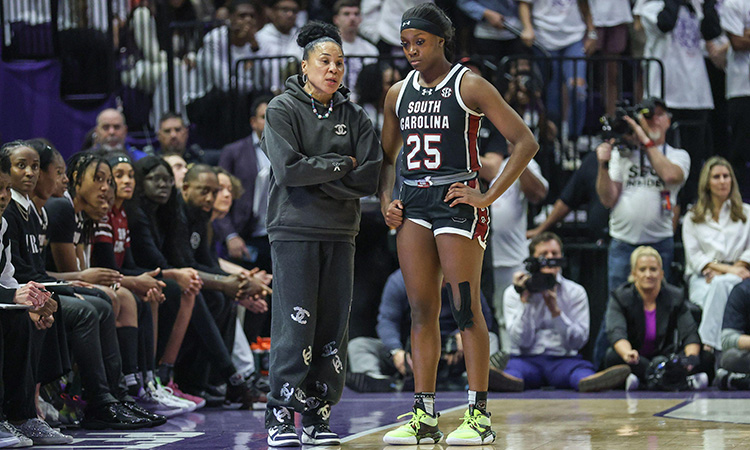
Are You Leading a Winning Team?
“A lot of people notice when you succeed, but they don’t see what it takes to get there.”
—Dawn Staley, Basketball Player, Olympian, and award-winning coach of the South Carolina Gamecocks Women’s Basketball Team
What does it take to build a winning team? Ask South Carolina Women’s Gamecock basketball coach Dawn Staley.
As someone who prioritizes rest and relaxation, my month of March was recently at odds with that. Like many, I willingly spent the month surrendering to the addiction that is women’s college basketball. The games had me glued to my television, screaming, leaping off of my couch, and swearing—sometimes all at once!
I grew up in South Carolina and I have always been a big Dawn Staley fan. I remember watching her pound her chest after the US Women’s Basketball Team won the Gold at the 1996 Olympics telling them to give her her medal. And while I never played basketball, I’ve always been a fan and supporter of the game. The level of training, commitment, and perseverance necessary to win are incredible. And once you win, it feels so good that you want to do it again and again–for yourself and for everyone around you. As an avid spectator, I resonate deeply with that.
Dawn Staley came to coach the South Carolina Gamecocks in 2008, and over the past 16 seasons, she has cemented her legacy and built one of the most enviable teams in all of college sports. It took a while to get there, but the years of preparation, planning, and action played a critical part.
South Carolina is an impressive team.
The team has only lost three games over the past three seasons (109-3). Yes. This is true.
This season they were undefeated (38-0). Yes. This season they did not lose a single game.
To top it off, in March, the team defeated the Iowa Hawkeyes (87-75) to win their third NCAA National Championship. This is after losing their entire starting line-up at the end of last season.
So what does this have to do with equity and inclusion?
I am often asked by clients and audience members at my talks how long it takes to shift culture. The short answer is that a culture shift can begin the moment you acknowledge that it needs to shift and take steps to begin engaging in the work of transformation.
Most leaders, no matter what industry or sector they work in, want a winning team. For many of us success is a virtue–and continued, sustained success is the ultimate goal. It takes work to build a winning team, and an inclusive culture is a key ingredient in that process.
Here are a few examples of what has helped South Carolina cement their legacy that we can use in our workplaces as we seek to build effective, inclusive teams.
They lost their starting line-up and didn’t let that get in the way.
In 2023, the South Carolina Gamecocks had an amazing basketball season, but they lost to the Iowa Hawkeyes in the Final Four and were forced to watch everything they worked for disappear. To top it off, the five members of their starting line up left the team. While this might seem like a tough break, the lesson is that sometimes the only place to go is up. Coach Staley and her team had to bring in and foster new talent and get everyone on the same page without missing a beat.
Sometimes in our businesses, we have setbacks when we lose key members of the team. The antidote for a setback is your recovery. If you have an inclusive work environment, it can make recovery easier. The ability to regroup when you experience the loss of team members is only possible when you have a culture of willingness and learning and everyone participates in the work. That’s the same with the work of inclusion–it is everyone’s responsibility to engage in the work. Since everyone reaps the benefits it only makes sense, right?
Leaders should consider:
Recruitment. What is your strategy for identifying and hiring people that add to your team’s overall success?
Setbacks. What is your plan for recovery when change presents itself?
The South Carolina bench scored 37 points because everyone showed up to play.
During the National Championship game, the members of South Carolina’s bench scored a whopping 37 points. Freshman athletes Tessa Johnson and Maya Fulwiley showed up big during the most critical pressure-filled moments. Tessa Johnson scored 19 of those 37 points. They were prepared and unwavering in their commitment to deliver the game to their team and executed their tasks flawlessly.
Imagine having a team with such talent that people can be focused on what they are really good at in the roles that are best suited to their skills and abilities. What’s better is that if your team is confident and prepared, when called upon they are rested, relaxed, and ready to answer the call of success. What’s even better is when every member of the team is excited about contributing to that success. Further, imagine having a company culture so fantastic that new employees and every individual contributor goes to amazing lengths to help your team succeed. That’s what DEI can do.
Leaders should consider:
Inclusion. What is your strategy for creating a culture of enthusiasm that inspires everyone to participate?
Seek success and lean into it.
During the National Championship game, Raven Johnson’s shots were just not landing, but she didn’t get frustrated and let it impact her game. Instead, she put all of her focus on guarding Iowa Hawkeye Caitlyn Clark like her life depended on it. And, her teammates stepped up to ensure that they didn’t lose ground on scoring.
On our teams it’s important to remember to spread the opportunities around and engage the best person to get the job done. It’s also imperative to create a culture where people support their colleagues to do the work and are not envious because they know their efforts are for the good of everyone at the company.
Leaders should consider:
Alignment. What’s your strategy for helping members of your team identify and harness their strengths? How do you encourage, or motivate, them to change course when things might not be working on a particular project?
Listen to your team–and learn from them.
In several interviews, Dawn Staley has spoken about the challenges that accompany creating an award-winning team. And while Staley has been playing basketball (and winning Olympic medals) before the team members were even born, she notes that it has been important for her to listen to and employ thoughts and ideas offered to her by the members of the team. She recognizes that it’s critical to listen to their ideas and perspectives because while she has been around the block, it’s always important to learn new things. To her credit as a leader, Staley allowed herself to learn from the players.
Let’s be honest that as leaders listening can sometimes be difficult, especially if we think we know better. As a leader, even if you know many things, there is still so much more to learn. And while our learning comes from many places, most often the best learning comes from the people around us that possess a shared commitment to shared outcomes. It’s important what our team members think. Remember that they might be exposed to areas of the business that we never even see or touch. Their ideas, thoughts, and perspectives are critical components of success.
Leaders should consider:
An informed perspective. What tools do you use to ensure that you are keeping your finger on the pulse of the thoughts, ideas, and needs of your team?
Yes. Shifting organizational culture does take time. The length will vary, but the most important variable is always our willingness to learn and participate. Along the way, it’s also important to effectively recruit team members, plan for setbacks, value inclusion above all, create ongoing alignment, and lead from an informed perspective.
What’s true about most teams is that no matter how well they work together or how much work they need to do to build a stronger, more united front, people are watching. And because they are watching, they are paying attention.
It’s in our DNA to cheer our heads off for successful teams. It’s also in our DNA to root for teams that we sense are working hard in order to win. The journey of any team is inspiring to everyone.
Because the truth of the matter is that we all want to be winners. And once people know that you’re a winner, they will always want to be on your team–and sometimes even wear your jersey.
Until next month!
Seena