Amid Boeing’s Credibility Crisis, How Does It Find the Right CEO?
Bill George, a former Medtronic CEO and chairman, doesn’t mince words when characterizing why airplane manufacturer Boeing is beset by quality problems that led to a fuselage panel blowout on an Alaska Airlines flight in January.
“It’s the Boeing leadership that has failed the culture for 20 years,” said George, who is an executive fellow at Harvard Business School. George has closely tracked the decision-making and performance of Boeing and co-authored a two-part Harvard case study titled “What Went Wrong with Boeing’s 737 Max?”
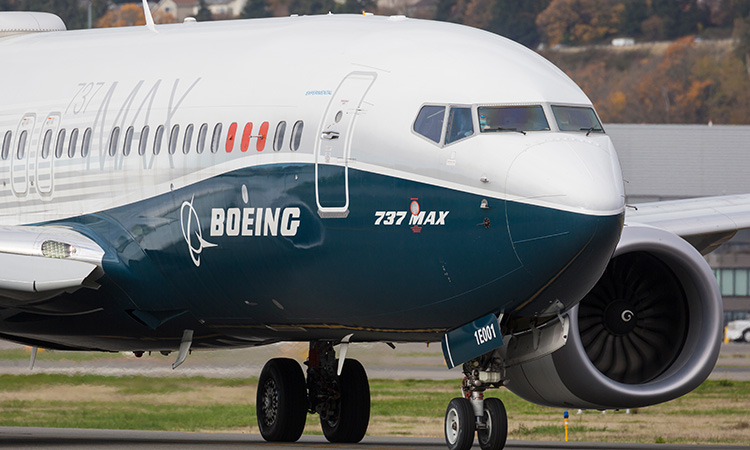
Two Boeing 737 Max planes crashed in 2018 and 2019 and those crashes caused the deaths of 346 people. After his students read about Boeing’s troubled modern history, George asks them whether they think the problems are caused by Boeing’s leadership or company culture. “Of course, the answer is both,” George said. He notes that top management’s focus on short-term profits altered the company’s culture that had emphasized safety and high-quality workmanship.
In an interview with Twin Cities Business, George described the kind of person Boeing needs for its next CEO and how that person should begin to address problems that have tarnished a company reputation once defined by engineering prowess and manufacturing excellence.
The search for a Boeing CEO appears to have been jump started by Boeing’s frustrated customers. The Wall Street Journal reported on March 21 that a group of airline CEOs wanted to meet directly with Boeing’s board to discuss problems with Boeing’s manufacturing processes, which have produced reliability and quality issues.
On March 25, just four days later, Boeing announced that CEO Dave Calhoun would step down by year’s end. In addition, the corporation said that Stan Deal, Boeing commercial airplanes president and CEO, was retiring and that Stephanie Pope, Boeing’s chief operating officer, would succeed him effective immediately.
The company also announced that Larry Kellner, Boeing’s board chair and a director for 13 years, would not seek re-election for another director term at the upcoming shareholders meeting. Steve Mollenkopf, former CEO of Qualcomm and a Boeing board director since 2020, had just been elected chair of the Boeing board. Mollenkopf also was chosen to lead the search for a new Boeing CEO.
“Those are dramatic changes. It’s very unusual to see that many,” George said.
Choosing the right CEO
Based on the severity of Boeing’s problems, George argued that it would be helpful to get a new CEO in place by the summer. At that time, he expects that Calhoun would leave the company “or they’ll say he’ll be an adviser to the board or some such euphemism.”
George emphasized that the board’s CEO selection should be done relatively quickly, but the timetable is a distant second priority for him. “The most important thing is to get the right person. They’ve had a history of not getting the right person,” George said.
In the past two decades, Boeing has had several CEOs who previously worked at General Electric and transferred their cost-cutting mentality to Boeing. Consequently, Boeing’s critics argue, the emphasis on short-term profits influenced decisions that created quality problems in the design and manufacture of Boeing planes.
“They are probably looking outside the company, I hope, but they’ve got to go through a proper [CEO] search and selection process,” George said.
It’s likely that Boeing will identify candidates who have proven CEO track records leading large, international industrial companies. Instead of strictly holding an MBA, it’s also probable the company will look for external candidates who’ve been educated as engineers.
George said the new Boeing chairman, Mollenkopf, has a “strong technical background,” so it’s possible he could be considered as a CEO candidate. He earned bachelor’s and master’s degrees in electrical engineering, has been an inventor on 38 patents, and was the CEO of Qualcomm from 2014 to 2021.
“Another candidate who would be excellent and has actually worked in the past at Boeing is Pat Shanahan,” George said. In September, Shanahan became CEO of Spirit AeroSystems, which makes the fuselage for the Boeing 737 Max.
Shanahan previously worked for Boeing for 31 years, served as deputy secretary for the U.S. Defense Department, and is now trying to deal with quality issues at Spirit AeroSystems. He holds bachelor’s and master’s degrees in mechanical engineering, and he also earned an MBA from MIT’s Sloan School of Management.
Work that is performed by Spirit previously was done in house at Boeing. Recently, Boeing and Spirit confirmed they are in talks over Boeing acquiring Spirit, which became a Wichita, Kansas-based public company in 2006.
The Wichita assets were a central component in a 2005 deal when Boeing sold its commercial airplane operations in Kansas and Oklahoma to Onex, a Canadian-based private equity firm.
In a 2005 news release, Boeing said that it wanted to focus on “large-scale systems integration, which is where we are most competitive and can add the most value to our airplanes and services.” In addition, the company said that Boeing would “benefit from lower procurement costs.”
The Seattle Times, in a March 1 article, emphasized that this divestment of Boeing manufacturing was opposed by technical experts within the company in 2005.
“That [outsourcing] vision was pushed after the merger with McDonnell Douglas in 1997, first by then-Boeing CEO Phil Condit and by his successor Harry Stonecipher,” the newspaper reported.
“But engineers inside Boeing warned as early as 2001 that the company risked losing control of its manufacturing processes and hollowing out its internal capabilities. The move to try to reacquire Spirit essentially concedes that the strategy went much too far and has damaged Boeing,” the Seattle Times reported.
‘Complacent’ board didn’t ask enough hard questions
Based on the complexity of Boeing’s problems, George said he wouldn’t want to choose a CEO who could only serve in the role for three or four years. He prefers somebody who’d be available to lead the company for up to 10 years.
Calhoun, a veteran GE executive and Boeing board member since 2009, became Boeing CEO in January 2020 following the rocky tenure of Dennis Muilenburg, who led the company when the two plane crashes occurred.
“I feel strongly that you want [a CEO] that has got a 10-year perspective,” George said. “Calhoun’s mistake was he was fixing problems. The quality problems became like whack-a-mole, but you haven’t fixed the underlying quality system.”
George agrees with many public company board members that perhaps their biggest responsibility is selecting the CEO. He’s critical of the string of CEOs selected by the Boeing board over the past 20 or so years. He also faults the Boeing board for not being more engaged in asking the hard questions of management.
He asks: “How can you have a major company like Boeing languish?”
He’s astonished the board members didn’t show more independence of thought. “If you’ve had four or five successive CEOs who didn’t work out, wouldn’t you say: ‘What did we do wrong?’ ” George said. He’s mystified why board members weren’t more rigorous in evaluating their own approach to interacting with top management.
He cites the case of W. James McNerney Jr., a former 3M CEO, who was serving on the Boeing board when he was tapped to become Boeing CEO, a job he held from June 2005 to July 2015.
“I think the board was not engaged in details and they referred everything to Jim McNerney,” George said. “So they went with his conclusions, and there were some very bad decisions made. Because that’s the GE influence, the short-term [thinking]. What can we do here to pump up the stock price?”
Instead of going forward and designing a new single-aisle aircraft, George said that McNerney and Boeing executives wanted to compress development time, so they decided to modify an existing plane to create the 737 Max. “That was No. 1, that was the fundamental problem,” George said. He added that Boeing is now feeling the pain from “not putting a focus on quality” years ago.
“The Boeing board was very complacent,” George said. “They weren’t asking the hard questions. That’s the board’s job to do. It’s not to applaud the CEO.”
Moving Boeing forward
In his role as a research analyst for Bank of America, Ronald Epstein has been assessing Boeing’s leadership, chronic problems, and business performance. He holds a master’s degree and a Ph.D. in mechanical engineering from Duke University and an MBA from the Wharton School at the University of Pennsylvania.
Epstein reacted favorably to the leadership shakeup unveiled by Boeing on March 25. “We see the changes as the first right steps of removing the ‘old guard’ and making way for a new team which can work from a less sullied slate,” Epstein wrote in a March analyst report.
Boeing needs a “drastic cultural overhaul, which is cultivated from the top, but sprouts from the bottom,” Epstein wrote. The new CEO, he said, would have to address any more changes required by the FAA, the possible acquisition and integration of Spirit AeroSystems, and bridge building with airline customers, investors, and the traveling public.
“We would expect more board seats will likely turn over, given new CEOs often come with their own brigade in support of their new vision,” Epstein wrote. “The new CEO will be coming into a Boeing which has been playing a reactionary defense for quite some time, however, the best leaders are forged in fire. This may be the first real chance, in a long time, Boeing has had to clean house and reset their own narrative.”
George also sees the selection of a new CEO as providing the potential for positive change at Boeing.
Before a new CEO comes on board, he said the emphasis needs to be placed on reducing production problems on existing airplane orders. “You have to have double and triple inspections,” he said. “You have to get the quality right on these aircraft. You sure don’t want another plane dropping out of the sky.”
He noted that consumers are living in an era of global airline expansion. “Now that we’re past Covid, everyone wants to fly,” George said. “Airlines have to have the aircraft to allow people to fly.” Yet, there are only two suppliers of major commercial aircraft—Boeing and Airbus.
After a new Boeing CEO begins work, George said it’s critical to deploy good people to tackle the range of Boeing’s systemic, cultural, and quality issues. “You’ve got to have a team of people that’s working on solving short-term quality problems, and then you’ve got to solve the longer-term problems,” he said. “You’ve got to do both simultaneously. You’ve got to walk down parallel paths. There’s no choice.”
Among the major challenges that the new Boeing CEO will face is addressing the Spirit AeroSystems quality manufacturing issues, whether Spirit remains a supplier or Boeing acquires the company. “You outsource things where other people have greater expertise like avionics and engines,” George said. “Outsourcing your mainstream manufacturing makes no sense to me.”
He also thinks it didn’t make sense when Boeing decided to move its headquarters from Seattle to Chicago in 2001 and then to Arlington, Virginia, in 2023. In the Harvard case study, George noted that Boeing received more than $60 million in state and local tax incentives over 20 years to be headquartered in Chicago. “This geographic distance—and the new executives’ lack of technical expertise—alienated Boeing’s engineers, who remained divided between military businesses in St. Louis, space-related units in Long Beach, and commercial aviation in Seattle,” he wrote in the case study.
George maintains that it’s crucial for Boeing to design and develop a new single-aisle aircraft, and top management should be close to its engineers rather than being housed near Washington, D.C., to meet with government officials.
It takes years to design and develop a new airplane. Meanwhile, he said, “they’ve got to fix the underlying collapse of their manufacturing quality system.” George argues that Boeing will be more successful in tackling its challenges if it returns its headquarters to Seattle, so the CEO and key executives are near its large manufacturing facilities in Washington state. “They should never have moved,” he said. “When you make a mistake, the first thing you can do is stop digging, admit your mistake, and correct it.”
The new CEO will be charged with improving relationships with Boeing workers.
If he were Boeing’s CEO, George said he’d go on a listening tour to learn about employee issues. “Tell me what’s really going on. What are the concerns you have about our system, about our quality, about our decision-making, about our design?” George said those are topics that he’d raise with Boeing employees. “I’d do that kind of thing all the time, and not with a huge entourage. I’d want to go listen to them.”
On March 8, Boeing management began negotiations with the International Association of Machinists and Aerospace Workers on non-economic issues. “A strike authorization vote is scheduled for July, with economic discussions focused on wages and benefits happening throughout the summer,” wrote analyst Epstein. The current contract is set to expire on Sept. 12.
Part of management’s job, George said, is having good, working relationships with unions. “People who build aircraft are craftspeople,” he said. “They’ve been doing this forever. You want detail people. You have to have the experience.”
While some companies, like General Electric, occupy a much smaller footprint, George said that Boeing needs to avoid a similar fate.
“We need to have a successful Boeing,” George said. “The United States, for national security reasons and for industrial competitiveness reasons, cannot afford to have Boeing disappear. It must find a way to solve its problems. There is no other alternative.”
Liz Fedor previously covered the airline industry for seven years at the Star Tribune.