AG Keith Ellison to Name ‘Strategic Facilitator’ in U of M, Fairview Talks
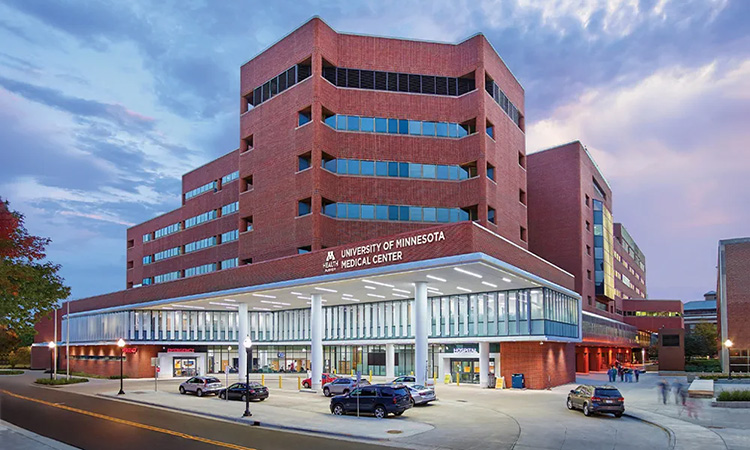
As negotiations on the future of the University of Minnesota’s relationship with Fairview Health Services hit a standstill, the state’s top lawyer is getting involved.
On Wednesday, Attorney General Keith Ellison announced that he will appoint a “strategic facilitator” to help guide talks between the U of M and Fairview. The pair’s care agreement expires at the end of 2026, and they haven’t yet landed on a mutually agreeable deal to keep it going after.
The university earlier this year unveiled plans to bring Duluth-based Essentia into the mix. Fairview’s leadership has expressed openness to some level of partnership with the Duluth health care provider, but firmly ruled out the prospect of a three-way merger between the clinical operations of all parties involved.
Now, Ellison is entering to help the parties “take a look at all potential solutions,” his office said in a news release issued Wednesday.
“Given the current status of the talks, the time pressure, and the importance of the public interest in getting this right, my office is taking a more active role,” Ellison said in the release. “The parties have tried to find a resolution in the past, and I commend their efforts; these are complicated matters, however. Importantly, the parties recognize the importance of these negotiations to the public interest and they welcome the chance for a fresh start.”
Ellison is operating under new authority granted by the Minnesota Legislature to review major transactions between health care entities. His office pointed to a 2024 statute that authorizes the state’s attorney general to “consider whether a health care transaction is in the public interest and seek court intervention if the attorney general finds that it is not.”
According to Ellison, the three parties involved will be “financially responsible” for the strategic facilitator.
In messages to employees on Wednesday, both the U of M and Fairview responded warmly to Ellison’s intervention.
“We welcome this development, as it provides an opportunity for a fair and structured discussion with a clean slate—one that does not begin with any predetermined proposal,” said Fairview president and CEO James Hereford and chair John Heinmiller. “This fresh start will ideally ensure that all options are evaluated objectively, without bias toward prior plans.”
But they also emphasized that Fairview’s board would need to sign off on any potential changes.
“We also understand the desire to reach resolution and have more certainty about our shared future,” Hereford and Heinmiller told employees. “That said, it is critical to be clear: regardless of this facilitation process, no external party can force Fairview into a contractual obligation with another entity. The decision-making authority is vested in the Fairview Board of Directors and Senior Leadership, ensuring that any decision is the best decision to further Fairview’s mission and values.”
Meanwhile, in a message to faculty and staff, U of M leadership similarly said they “support the Attorney General’s engagement and approach, and look forward to the conversations with Fairview and Essentia leadership.”
University leaders added that they “continue to believe that the integrated vision outlined in the all-Minnesota solution is the best opportunity we have as a state to improve health care access and quality, to equip providers to most effectively serve patients closer to home, and to maximize the benefits of the University’s teaching, research, and outreach mission.”
The stakes in this complex deal are high. In the existing long-term agreement, Fairview supplies patients to university physicians and makes annual payments to the U.
At the same time, the university’s medical school has trained about 70% of doctors across the state of Minnesota, the Star Tribune reported early Wednesday.
“If we don’t achieve a solution,” the U’s leaders said, “the future of Minnesota’s health care workforce, the University of Minnesota Medical School, and the innovation pipeline that is fueled by our medical research are all at risk.”
For what it’s worth, Fairview has significant leverage in ongoing talks. “It has no obligation to sell the University of Minnesota hospitals,” a business leader, who has no ties to the three parties, told TCB last month. “The University of Minnesota doctors will need the patient volume from Fairview, so they will continue practicing at Fairview.”
A spokesman for Ellison’s office noted that “the parties have all agreed to work with a strategic facilitator, and we are currently discussing the details of that process with them.”
[On Wednesday, April 2, Ellison announced that he has picked Lois Quam, a veteran UnitedHealth executive and southwest Minnesota native, to serve as facilitator in talks between the U of M, Fairview, and Essentia.]