

Could Black Walnut Syrup Replace Maple?
The taste of success is different for every business. For the University of Minnesota Landscape Arboretum, success is beginning to taste like pancakes and syrup.
On Saturday, hundreds of Minnesotans drove to the Arboretum in Chaska for its annual Maple Fest, where educators and volunteers demonstrated how maple sap is collected, processed, and transformed into syrup.
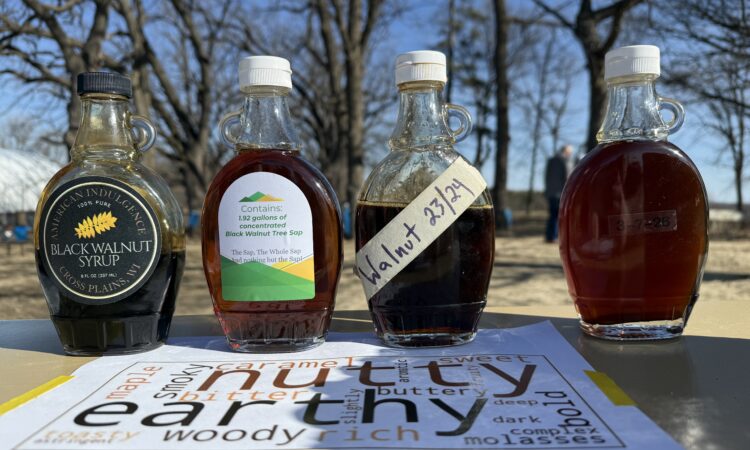
The U also showcased a rare variety of syrup its employees have researched since 2023: black walnut syrup. The research, funded through grants from the National Institute of Food and Agriculture, looked at black walnuts as an alternative to maple trees for tapping while working to understand the market potential of black walnut syrup.
From a study last year with more than 100 people, the U found that syrup consumers most enjoyed caramel and maple flavors, while bitterness and burnt flavors were the least favorite.
“The black walnut has a higher sugar concentration on average than maple syrup,” says agronomist Herika Paula Pessoa, noting that this makes it an “ideal consumer product.”
On Saturday, tour guests agreed with the U’s research findings. Standing under two parallel rows of 35-foot black walnut trees, the group shouted in unison that the black walnut syrup, made from 99-year-old trees, was “really good.”
Some even admitted they preferred black walnut syrup over maple.
RELATED: Fertilizer Prices Spike 20%, Pivot Bio Sees Market Opportunity
Research suggests the product may be more nutrient-dense than traditional sweeteners, including maple syrup. And studies show black walnut syrup has significantly more antioxidants compared to maple.
“There is a lot of market potential,” says Brandon Miller, assistant professor in the Department of Horticultural Science. But there aren’t many producers marketing it. “[Black walnut syrup] hasn’t hit its stride.”
Challenges of a Sticky Industry
Black walnut trees have traditionally been valued for nuts and timber. The U.S. Navy has used the woody husks of black walnuts to clean ships and remove paint.
But the trees have been underexamined for their horticultural applications, including syrup production.
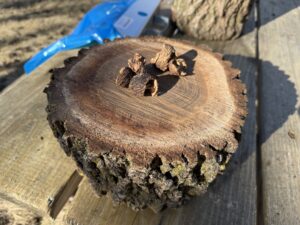
The new economic opportunity for black walnuts lies within the sap, drilling past the inch-and-a-half-thick bark.
But before this “ideal consumer product” can take off, there are a few problems to sort out. Black walnut trees produce less sap on average than sugar maple trees. And it takes a lot more sap to make a gallon of black walnut syrup, agronomist John Hennessy says.
For those reasons, the price of black walnut syrup is much higher than maple.
Right now, “for those who process and sell black walnut syrup, they are getting a premium price,” Miller says. Eight-ounce bottles can sell for $40, “which is pretty extravagant.” The arboretum sells bottles of black walnut syrup, less than eight ounces, for $15 in its gift store. Customers buy all of it up the first day it hits the shelves, Miller adds.
In comparison, the retail price of an 8-ounce bottle of maple syrup ranges from $8 to $10.
Drawing more sap without over-tapping could drive down the product price. When a tree gets over-tapped, its vascular system weakens, hindering its ability to transport nutrients and defend against diseases.
All the U’s black walnut trees have one spile (or, spout) for tapping, but Hennessy says a few of them could handle up to three thanks to the tree’s wide diameter. However, Miller says he doesn’t want to put in too many spiles because the trees, planted in 1927, are old.
The price of black walnut syrup could also lower with increased production and market competition.
Could Black Walnut Trees Become a Dominant Food Source?
The spring tapping season, which Hennessy says changes in length each year, is already coming to a close for both sugar maple and black walnut trees. Both trees’ seasons run parallel to each other, Hennessy explains.
Days after Maple Fest, blue bags filled with sap still dangle from the trees, ready to be collected. Cracked shells litter the muddy ground underneath the 50 black walnut trees, a sign of where the squirrels have been.
“Whether you’re a backyard grower or you want to do a commercial grove, there’s potential across the board,” Miller says. “I think the big deal is that this is an alternative tree species that helps to diversify our food system.”
Black walnut syrup provides another food source as climate change affects what crops remain available, Miller says. He says other tree species, like black walnuts, are “important [for discovering] a wider range of climate adaptability.” Global warming may change the sap yield and flavor of sugar maples. In 100 years, sugar maples will migrate farther north into Canada, he predicts, while black walnut trees will be better suited for Minnesota.
The U’s Department of Horticultural Science is also looking into tapping sycamore trees but hasn’t started that process.
Plus, another use of black walnuts remains untapped: Miller says a researcher at the U is interested in seeing if the green flesh that coats black walnuts could be used as a dye for henna tattoos, since the green flesh contains a compound that stains skin when handled without gloves.