2023 Giving Guide: Maximizing Large and Unexpected Grants
It’s not unusual to read a news story about a major charitable gift going to a Minnesota charity. Since the beginning of 2022, the University of St. Thomas announced a $75 million gift, Saint Mary’s University of Minnesota received $25 million, and Minnesota Public Radio reported receiving a $56 million anonymous gift.
What is news is when nonprofits receive such generous contributions without a long period of donor cultivation or when the nonprofit is small, community-based, or working on social justice causes. Big gifts tend to go to large mainstream organizations, with universities historically near the top of the list, reaping the benefits of their long-term relationships with alumni.
Inequality.org, which tracks the volume of donations to specific recipients, shows that Donor Advised Funds (DAF) such as Fidelity’s Charitable Gift Fund received the largest total dollar amount of charitable contributions in 2020 from all donors. In the United States, eight of the top 20 awards went to DAFs; higher education institutions got four of the top 20. Large social service providers, including Salvation Army, St. Jude Children’s Hospital, the Boys and Girls Clubs of America, and Catholic Charities USA, also were represented in this top group.
So when news hits that billionaire Mac-Kenzie Scott has surprised much smaller and locally based organizations with major gifts, it’s game-changing news. Scott, whose current net worth is estimated at $25 billion, signed the “Giving Pledge” in 2019 and has publicly stated her goal to give away at least half her fortune in her lifetime.
The Giving Pledge was created in 2010 to encourage the world’s wealthiest individuals to dedicate the majority of their wealth to charitable causes. Well-known pledgers include Warren Buffett, Mark Zuckerberg, Bill Gates, and Carl Icahn. Scott is a published author whose vast financial assets came from her divorce settlement from Amazon founder Jeff Bezos.
Scott’s philanthropy in Minnesota is documented best on her website, yieldgiving.com. The website details some $14 billion in charitable donations she’s made thus far to more than 1,600 nonprofits internationally, of which at least 18 gifts went to Minnesota nonprofits. But the list is likely incomplete, according to observers who note that Scott’s disclosure practices are continuing to evolve. Eventually, charitable donation recipients will report Scott’s hefty contributions on their federal tax returns, which will be publicly available.
For now, Yield Giving’s data and some sleuthing will have to do. The total amount of Scott’s generosity in Minnesota is not a number that’s easy to find. Scott only discloses the amount of each gift when the recipient agrees. Many listings on the Yield Giving website say “Disclosure delayed for the benefit of the recipient.” In addition, one Minneapolis-based organization announced it received an $8 million Scott gift, but it doesn’t show up when you search for Minnesota grantees on the Yield Giving site. Arts Midwest, a regional arts service and development organization, is only listed under “Midwest” geography on the website.
Scott’s giving has signature elements that Yield Giving and news reports consistently amplify:
- Scott doesn’t want the giving to be about her but rather about the recipients. She leaves the announcement up to the organization and isn’t looking to get her picture in every newspaper.
- Gifts are unrestricted. Not a single gift on the Yield Giving site offers a “grant purpose.” Instead, the site offers, in a sentence, the organization’s mission statement. The gifts come with no strings attached.
- Organizations often describe her gift as the largest they’ve ever received and use words like “unexpected” and “surprise.” Often organizations are not aware that they are being considered for possible gifts by Scott’s team.
- Scott is forthright in her support for social and racial justice, environmental, and human rights causes, with many gifts supporting BIPOC-led organizations, LGBTQ+ service and advocacy organizations, nonprofits serving women and girls, and climate change activists.
- Before the launch of the Yield Giving website, Scott was regularly writing about her philanthropy on her Medium site; the most recent post was published this past December. Other than these essays, Scott does not comment on her process or rationale.
$13.5 million for Habitat housing
Twin Cities Habitat for Humanity is a Minnesota nonprofit that received an unexpected $13.5 million gift from Scott. The staff responded to an inquiry asking what they would do with a significant influx of new unrestricted funds and had to quickly respond. A few months later, the call came through to Chris Coleman, president and CEO, that the funds would be made available, with a request for confidentiality in the short term.
Cathy Lawrence, chief of staff, says that TC Habitat was piloting a homeownership program designed to help close the racial housing gap between African Americans and white families in Minnesota. The TC Habitat program targets U.S.-born residents of the seven-county metro area who are descendants of enslaved Africans brought to this country. Habitat had identified these individuals as facing the steepest barriers in obtaining a mortgage and the widest disparities in rates of homeownership.
Lawrence says the Scott gift is helping TC Habitat work on scaling the program to reach more families. Of the most recent cohort of participants, 13 have already closed on a home, seven are in process, and five families are shopping for homes.
TC Habitat has helped these homebuyers with programmatic support, access to a different set of underwriting criteria, and additional financial assistance, so participants can come to the table with greater support, knowledge, and resources. TC Habitat also made a much-needed investment in its digital capacities, upgrading computer systems and equipment.
Asked about lessons learned from managing this windfall, Lawrence says, “We didn’t decide what to do with the money right away. We held listening sessions and considered options, not only in the community but with our own staff and board.”
While everyone was in immediate agreement about expanding the Advancing Black Homeownership Project, ideas such as strengthening technology came from these listening sessions.
“What’s clear is that Scott trusts us to do the work we have set out to do. There are no hoops to jump through, no restrictions, no reporting. Just do the good work. Trust is a big part of the message,” Lawrence says.
Equity funding at Penumbra
In 2021, Penumbra Theatre in St. Paul also received a surprise call from MacKenzie Scott’s team, letting president Sarah Bellamy know to expect a $5 million gift.
Read more from this issue
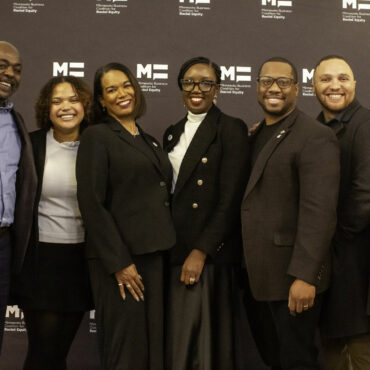
Khamara Pettus, Penumbra’s director of development, says that a major impact of the gift has been to “allow Penumbra to shift its focus on future investments versus focusing on surviving the here and now.”
The African American theater has long struggled with undercapitalization, even as it has been among the most generative and critically acclaimed companies in the United States for more than 40 years—a clear reflection of data analyzing the historical gaps in funding for BIPOC-led cultural beacons like Penumbra.
“Equity requires the moving of resources to the communities that are most affected by systemic injustice and to the organizations led by and serving these communities,” Pettus says of gifts like Scott’s. “The shift toward removing hurdles and barriers to funding is a step in a more equitable direction.”
Penumbra is transforming from a theater company to a center for racial healing. Programs will expand beyond producing plays to include nurturing Black artists, advancing racial equity, and providing wellness programming for individuals and communities, all supported in part by Scott’s gift.
Pettus describes the unrestricted gift as wonderful. “Ms. Scott is leading a trend that exemplifies many of the hallmarks of equitable funding practices; by focusing on underserved communities and trusting that those communities know what they need and how to invest wisely, it does profound reparative work,” she says.
Growth in windfall philanthropy
Alongside MacKenzie Scott’s huge grantmaking initiative comes the trend in “windfall gifts.” Large grants are increasing in frequency in the nonprofit sector. Whether these arise from one-time federal Covid relief payouts, gifts and bequests representing the intergenerational transfer of wealth, gifts resulting from the sale of businesses, or gifts made for tax purposes, there is now a clear pattern emerging of larger gifts to more organizations.
Workshops in windfall planning are popping up, and more organizations are thinking about what they would do to seize such an opportunity if it arises.
“We definitely are seeing this more and more, outside the typical mainstream foundation and individual funding,” says Heidi Grinde, principal at CliftonLarsonAllen, the Minneapolis-based global financial consulting firm with a large nonprofit client base. “[Scott] is doing this, and other donors are picking up on it. They may choose only one organization for a bequest or make a major gift while they are still living.”
Beyond multimillion-dollar grants, Grinde says, “we are also seeing the $100,000 to $200,000 unexpected gifts, and depending on the size of the operating budget, these can be very, very significant.”
In April, Stanford Social Innovation Review published an advice piece on dealing with windfalls, after author Humberto Camarena interviewed windfall recipients. Both he and Grinde agree that having a plan is critical.
In “Riding the Wave of Abundance,” Camarena, of La Piana Consulting, urges nonprofits to pace themselves and “build a visionary plan.” He suggests careful investments in infrastructure and clear-eyed thinking about what happens when a windfall is spent.
Grinde suggests that organizations “do some careful dreaming now.” Consider board training and “blue-skying” to think about what you would do if resources were available. “It’s good to think about this before it happens,” she adds, “and think about what’s holding you back from advancing your ideas now.”
Scott’s giving adheres to the growing movement called “trust-based philanthropy,” a peer-to-peer initiative among funders started in 2020 “to address the inherent power imbalances between foundations and nonprofits.”
The initiative advocates six grantmaking practices that are evident in Scott’s approach and that most nonprofits wish would be more widely adopted. They are: advocacy for multi-year unrestricted funding as the norm; putting due diligence of organizational research on the donor, not on the applicant; simplifying and streamlining paperwork requirements; building transparency into grantmaking processes; soliciting and acting on feedback; and giving support “beyond the check.”
Scott’s large-scale gifts, and those of other donors, are not only influencing the way nonprofits think about the need for and contours of strategic planning, but they are also heralding a different kind of philanthropy whose emphasis is squarely on the recipient and not on the donor.
While Scott is certainly attracting media attention, she consistently and purposefully deflects it, asking us to instead look at the opportunities and gaps in society and how we all might help.
In her Giving Pledge essay, she says, “I have no doubt that tremendous value comes when people act quickly on the impulse to give. No drive has more positive ripple effects than the desire to be of service.”
Minnesota nonprofits will be watching Scott’s next steps, and they’ll likely be doing some blue-sky thinking in the process.
Click here to view the full list of Minnesota nonprofits on our 2023 Giving Guide.