The Micro-Apartment Trend Is Still Going Macro
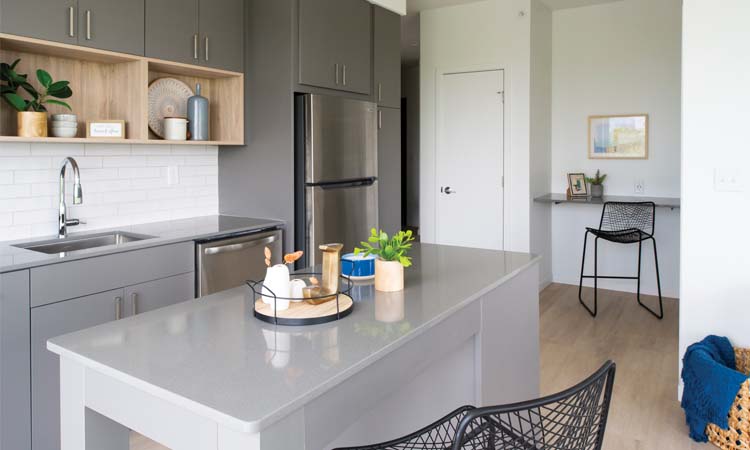
Micro-units took off as a rental trend in the Twin Cities roughly a decade ago. They are compact apartments, often railcar-shaped. Their origins are traced to high-density solutions from 1970s Japan. “They’re popular in places where housing costs start to rise,” says Sean Sweeney, a developer of nine Minneapolis apartments with at least some micro-units. These mini dwellings haven’t just survived the pandemic’s claustrophobic work-from-home conditions; they’ve thrived.
Sweeney’s firm opened a Minneapolis micro-unit complex the week Covid-19 hit. “We thought we were screwed, but [the complex, MN46] leased up great.”
The appeal is simple: The apartments combine high-end with low cost. In the most desirable big-city neighborhoods, where the U.S. trend first hit, Sweeney says, “it becomes more and more difficult for the majority of people to afford an average-size apartment.”
That may explain growth nationwide. StorageCafe, an online marketplace for self-storage units, reported that 2.4% of apartment units constructed last year were under 441 square feet. That’s almost double the figure from nearly a decade ago: 1.6% in 2015.
In Minneapolis, more than a fifth of new apartment construction at one point this summer was for micro-units, also per StorageCafe. Its report defines a micro-unit as under 433 square feet, less than half the state’s average apartment size.
Sweeney says demand has held steady for a decade.
The Federal Reserve Bank of Minneapolis has tracked slower rent growth the past five years, but hot neighborhoods like the North Loop still squeeze the incomes of what Sweeney identifies as his target demographic: people making $50,000 to $75,000 a year, usually in their first or second job.
In a micro-unit one-bedroom, about 500–600 square feet, he says, “maybe their rent is $1,300 a month instead of $1,750.” That’s enough to meet demand, with many micro-unit buildings also sporting fitness centers and coworking spaces.
Micro-units also ease the supply side. “Development in the Twin Cities—and, frankly, around the country—has fallen off a cliff the last couple of years,” Sweeney notes. Developers hit a sweet spot with micro-units. Post-Covid construction costs are high, so it makes economic sense to build to the top end of the market (“unless you’re doing affordable housing with tax credits from the government,” he adds).
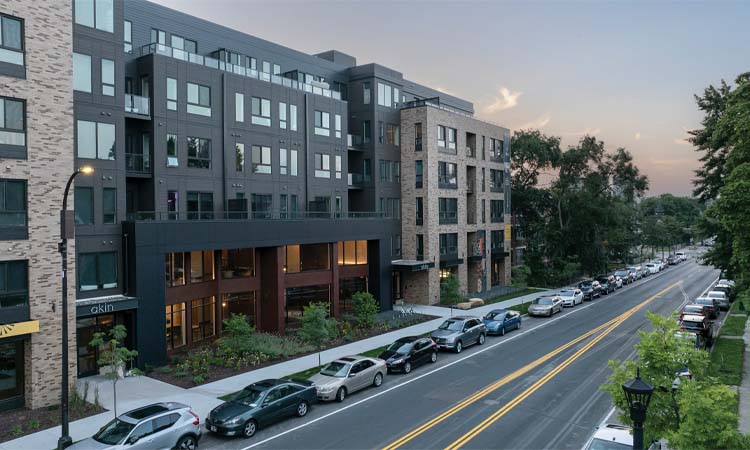
He points to his Akin development, with 204 micro-units, which is 98% occupied. Aiding the trend: “The whole roommate thing has really gone away.”
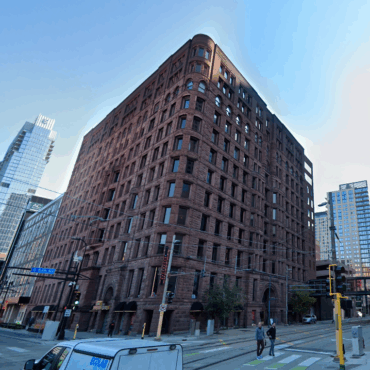
Three Minneapolis micro-unit buildings
Akin with 204 micro-units opened on Nicollet in the Lyndale neighborhood in 2023, the most recent development by Sweeney’s firm, Hall Sweeney Properties.
Artistry on 10th was built downtown in 2019.
SoPHI, on East Lake Street, was bought by the state of Minnesota to house people with mental illnesses and intellectual and developmental disabilities.