Sparking Hope in Local News
The John S. and James L. Knight Foundation, based in Miami, targets its grant funding to communities where the Knight brothers once owned daily newspapers. In our region, the St. Paul Pioneer Press, Duluth News Tribune, and Grand Forks Herald were part of the former Knight-Ridder network of local news operations.
The Knight Foundation maintains a staffed office in St. Paul, one of eight such offices nationally. Through its local grantmaking and national initiatives, Knight has become a philanthropy to watch in Minnesota.
The corpus of the foundation’s $2.5 billion in assets came primarily from wealth built through the news business. Today Knight is best known for its support of journalism, for protecting free speech and First Amendment rights, and for other efforts that contribute to an informed and engaged citizenry.
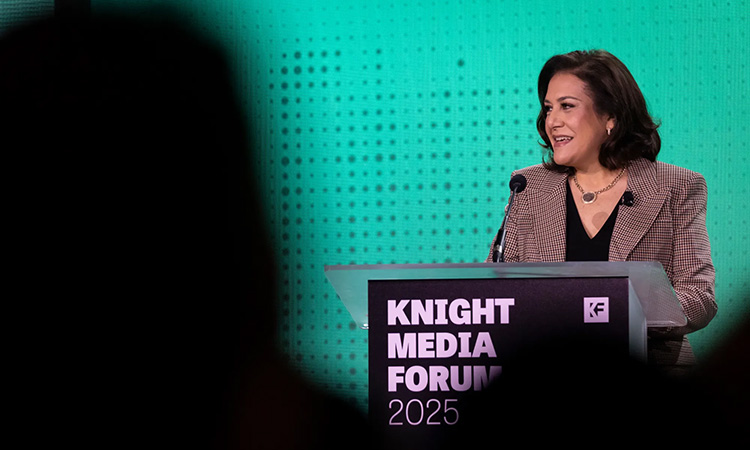
Knight produced its 18th annual Knight Media Forum in February, attended by more than 1,000 leaders in news and civic engagement from across the United States. The event featured provocative top-level speakers, who stimulated debate about current events and new media models.
The feeling of new directions amid new challenges was evident at the forum, which was led by Maribel Perez Wadsworth, who was celebrating her first-year anniversary as Knight’s president and CEO. Multiple sessions addressed the new Trump administration’s shifting practices around media access as well as how journalists are covering the three branches of the federal government.
Perez Wadsworth opened the conference with a powerful message that resonated with attendees, setting the stage for the forum’s emphasis on local engagement and local action. “The power to create change is not lost—it’s local,” she said. In the fallout from ending federal support for DEI initiatives, she added, “We know that communities are strongest when we value and empower every member.”
Her opening remarks were a tonic for the serious consternation from news leaders and tech executives who were in the forum’s cohort of pundits and practitioners. She reminded attendees that hope, engagement, and connection are transformation tools of civil society.
Knight showcased new efforts to link its work across sometimes siloed program areas, with sessions covering not only journalism but also AI, censorship and free speech, storytelling, and arts and culture.
Many private-sector grantmakers were also present, largely because of the burgeoning Press Forward program that is spurring formation of local chapters that encourage local philanthropies to pool their grant dollars to revitalize local news.
Press Forward now has 34 chapters in 29 states and has raised $200 million from 88 grantmakers. There’s an active Press Forward chapter in Minnesota.
Speakers and attendees pondered threats and opportunities resulting from AI. San Jose Mayor Matt Mahan outlined his city’s investments in AI in a conversation with DJ Patil, former U.S. chief data scientist. They described ways that AI initiatives are reshaping governance and building pathways to citizen engagement.
For example, AI-enabled city vehicles can be “trained” to recognize potholes before citizens complain, and incoming email to the mayor’s office, once handled manually by staff, can be pushed to the relevant department. The city of San Jose led creation of the nationwide Government AI Coalition, which seeks to promote and share responsible and purposeful AI applications and policies in the public sector for the public good.
Recently retired U.S. Surgeon General Vivek Murthy’s closing address echoed the value of connections among people, speaking to what he believes is missing in our lives and in our society. “I have come to see there are three essential elements that fuel our fulfillment and well-being that have been missing in many people’s lives: relationships, service, and purpose,” he said.
His prescription for action? “Small steps we take create the opportunity to make big cultural and policy shifts.”
His three suggestions won’t require a foundation executive, news junkie, or journalism policy wonk to enact. “Can we do one small thing each day to help someone? That is how we serve. Can we reach out to one friend each day to check on them? That is how we nurture relationships. Can we talk to our friends and our children more openly about how we find purpose that is rooted in contributing to the lives of others?”
While we can study and worry about the impact of technology on journalism, media, culture, and social systems, low-tech and local are the places where strengthening civil society begins.