Minnesota Power Generates Future Plans Despite Controversy
The recent news that the proposed data center in Hermantown (just outside Duluth) is Google makes this a good time to catch up with Minnesota Power.
The Duluth-based electric utility was acquired last October in a deal that generated fierce controversy. Critics focused particularly on one of the two parties purchasing Allete, Minnesota Power’s parent company. This was investment company called Global Infrastructure Partners, a subsidiary of New York-based BlackRock, the world’s largest institutional asset manager. Those opposing the deal argued that by taking a publicly owned utility private, BlackRock would pay more attention to its investors’ returns than to the public’s needs. These critics probably weren’t comforted by the fact that earlier this month, Global Infrastructure Partners and other investment groups announced the acquisition of another utility with renewable energy expertise, Virginia-based AES Corp.
While its own deal was being finalized, Minnesota Power also found itself part of another controversy in the Northland last fall. That’s when a remarkably secretive construction project in Hermantown was revealed to be a hyperscale data center. Though definitions vary, a hyperscale data center typically describes a massive facility housing more than 10,000 servers in a single location. Several have been proposed in Minnesota, and all have faced public protest and even legal action.
This hasn’t stopped Minnesota Power from preparing for its future. And it’s one that people outside of the Northland—and perhaps outside of Minnesota—will keep watching.
Minnesota Power’s moves
In January, the Minnesota Public Utilities Commission approved a site permit for Minnesota Power to construct an 85-megawatt solar project next to its Boswell Energy Center in Cohasset. The Boswell complex currently comprises the utility’s last two coal-fired power plants. The utility plans to shut down those plants by 2035. That would help Minnesota Power keep on track to meet state regulations requiring utilities to produce electricity solely from carbon-free sources by 2040.
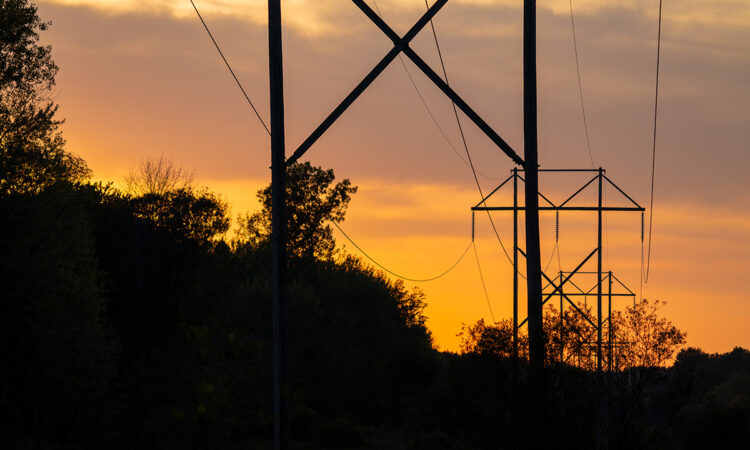
Last December, Minnesota Power announced that it planned to build a new transmission line between Duluth and Grand Rapids. This line would connect two major lines and help reduce congestion. It’s one of several transmission line projects the company has announced in recent years to alleviate potential grid congestion as more renewables come online and energy demand increases.
Grid expansion has become a critical issue for the country’s energy future. U.S. government studies have shown that the national electricity transmission system must at least double in size by 2050 to meet rapidly growing energy demand from data centers and other users. This expansion is also needed to accommodate carbon-free electricity production, which is less centralized than power generated from fossil-fuel sources.
Next generation
The proposed Google data center calls for four buildings, each up to 50 feet tall and 300,000 square feet, to be constructed on a 200-acre site in Hermantown. Hoping to calm public concerns, Minnesota Power announced that Google would help fund the production of clean energy projects that would generate 700 megawatts of electricity. (Minnesota Power’s current capacity is about 2,000 megawatts.) The tech giant also promised to contribute $5 million to boost energy affordability for the utility’s residential customers.
Will Google’s offers reduce public worries and make it easier for construction to go forward? Hyperscale data facilities are facing significant resistance nationwide. A large data center uses up to 500 megawatts of electricity per day, about the same amount a midsize city requires. Opponents claim that massive electronic facilities would drive up consumer utility bills because of the various incentives (including tax breaks) that these projects typically receive. In short, whatever their potential economic benefit, these facilities simply aren’t popular.
Many of those opposing hyperscale data center projects also assert that their construction is being driven primarily by the explosive growth of AI usage. The suspicions that a great many people harbor about AI are well-known. Critics see large data centers as part and parcel of an AI bubble that will leave taxpayers to clean up the mess once it explodes while tech bros and their high-net-worth investment partners come out relatively unscathed. But supporters note that hyperscale data centers are needed not solely for AI but also to accommodate other lower-profile but essential uses, including cloud computing and the storage of medical images and data.
In response to public concerns, about a dozen states have introduced bills that would establish a temporary moratorium on hyperscale data center construction. None has passed so far, but several local governments have established their own short-term bans. In Minnesota, despite new rules the legislature enacted last year, many communities and activists are calling for additional government guardrails. Last month, Eagan became the first city in the state to enact a moratorium on hyperscale data center construction.
Meanwhile, in Hermantown, the St. Louis County Board of Commissioners are currently looking at ways to address concerns about the proposed Google facility. That’s assuming that construction does begin: Google pulled out of a hyperscale data center proposal near Becker in 2022.
At least one energy industry observer has expressed cautious optimism. A recent white paper released by St. Paul-based carbon-neutral energy advocacy group Fresh Energy asserts that if properly developed, large-scale data centers “could help reduce emissions, lower electricity rates, and provide clean heat and tax revenue to surrounding Minnesota communities. But only with the right regulatory framework.”
All this suggests that Minnesota Power will remain at the center of fundamental, crucial issues involving energy and technology for some time to come.