Metro Transit Ridership Up 12% Through April
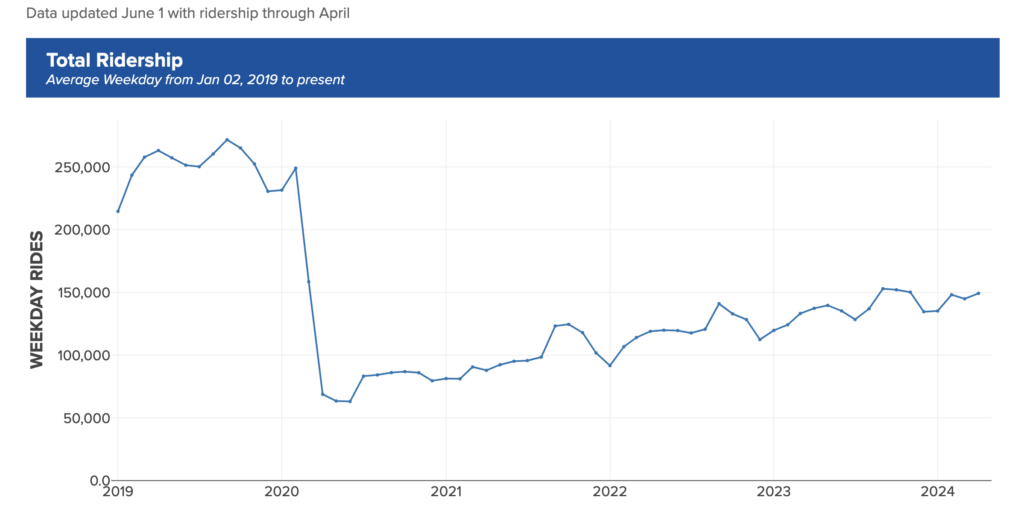
After a dramatic drop in 2020, Metro Transit ridership is inching back up. On Wednesday, the transit agency reported that its buses and trains provided more than 15.6 million rides over the first four months of the year.
That marked a 12% increase over the same period last year.
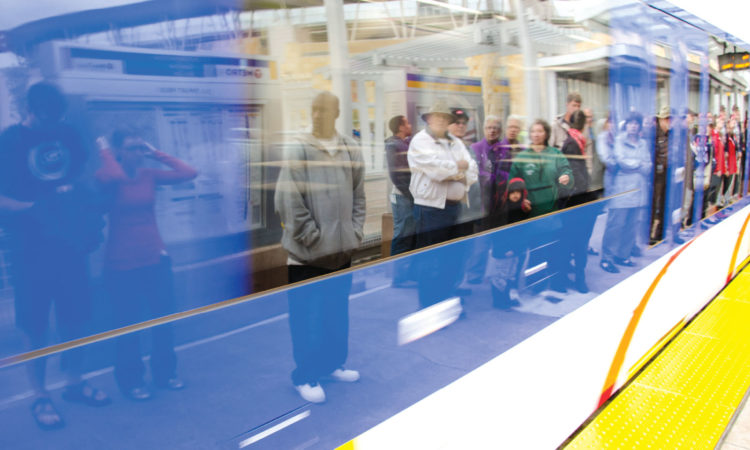
Metro Transit leaders said that ridership is up across all modes of transit: On a year-over-year basis, bus ridership was up 13%, light-rail up 10%, and Northstar commuter-rail up by almost 33%.
Average weekday ridership, meanwhile, was 144,315 throughout the end of April. Despite the mild uptick, that was notably down from the pre-pandemic days; in April 2019, weekday ridership was over 263,000.
Still, the continued growth over last year is a sign that residents “value convenient, reliable and affordable service, and want to see more of it in the years ahead,” Council Chair Charlie Zelle said in a statement.
The number of rides through Metro Transit’s Transit Assistance Program—which provides lower-income individuals with a reduced fare of $1 per ride—has also increased by almost 15% from last year.
Transit workers are also set to receive a 4.5% raise on Aug. 1 in an effort to draw in candidates for the hundreds of operator, technician, and other jobs Metro Transit aims to hire for future service improvements.
Metro Transit is also hoping to hire 22 agents for its Transit Rider Investment Program, which began this February, to check fares, issue citations, and administer first aid and Narcan when needed. The Met Council funded those new positions to free up police officers from fare enforcement. Lesley Kandaras, Metro Transist’s general manager, last summer told MinnPost the workers will “be responsible for routine fare compliance now that we also have the administrative citations authority.”
The number of overall crimes committed on Metro Transit property in the first quarter of 2024 decreased by 7.7% from the same period in 2023, according to a press release.
Metro Transit also plans for buses to run more frequently on several routes, such as the 2, 25 and 32, as quarterly schedule changes begin on June 15.
The agency also aims to open three new bus rapid transit lines serving Minneapolis, St. Paul, and Edina in 2025. Crews will begin building stations for the new bus rapid transit lines along West Lake Street and in southwest Minneapolis this year. Station construction is underway in downtown St. Paul and on a new park and ride in Woodbury.