Magnet Startup Niron Attracts More Big-Name Investors
Niron Magnetics continues to attract attention—and funding. The Minneapolis-based startup announced today that it has received $25 million in new funding from investors including Indiana-based manufacturer Allison Transmission and Canada-based automotive supplier Magna International. Samsung Ventures, the investment arm of the South Korean manufacturing giant, led the funding round, which also includes additional funding from two previous investors: the University of Minnesota and the Shakopee Mdewakanton Sioux Community.
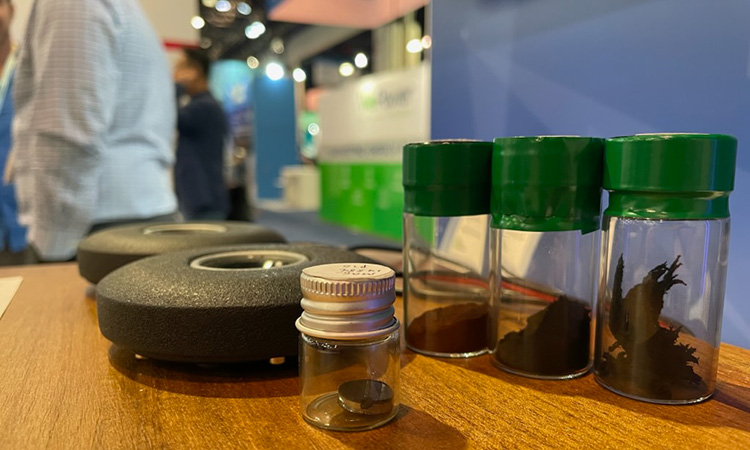
Since its founding 10 years ago, Niron Magnetics has received funding of $86.38 million from sources including the U.S. Department of Energy and automakers GM, Volvo, and Stellantis. It also attracted the attention of Time magazine, which named Niron’s Clean Earth magnet one of its “Best Inventions of 2023.” The new investment will help Niron Magnetics accelerate commercial development of the company’s Clean Earth permanent-magnet technology.
Why are investors pouring millions into this technology? “Permanent magnets,” as the term suggests, maintain their magnetic capabilities and are extremely difficult to demagnetize. Their applications are broad and familiar, including disk drives, refrigerators, and audio equipment. But it’s the automotive market that’s been particularly interested in Niron Magnetics’ technology. Besides helping to power vehicles’ audio systems, fuel pumps, and other components, permanent magnets are crucial components in electric vehicles (EVs). These applications currently use permanent magnets that contain rare earth materials—and that’s where Niron Magnetics and its investors see the Clean Earth magnet’s opportunity.
Rare earths are a family of metals whose distinctive properties—including both high density and malleability—have made them indispensable in the production of glass, electronic components, and industrial magnets. From a global perspective, rare earths actually aren’t rare. But because they are typically found interspersed with other minerals and not in concentrated deposits, they are highly expensive to process, and their production can generate massive amounts of toxic waste.
Another problem with rare earths: One country holds a near-monopoly on the supply. China produces more than 90% of the world’s rare earth materials. While other countries, notably Australia, are ramping up production, China’s capabilities are still far ahead, and it can supply rare earths at lower prices than most other nations. U.S. rare earth production is tiny, since the costs tends to discourage potential investors. But the demand for such materials remains powerful, as has interest in cleaner, more broadly available alternatives.
That inspired University of Minnesota electrical engineering professor Jian-Ping Wang and his team to develop a new magnet material that doesn’t contain rare earth metals. Iron nitride is derived from iron oxide, more familiarly known as rust, which can be sourced from a wide variety of suppliers, including iron and steel recyclers. In 2014, Wang launched Niron Magnetics with the University of Minnesota’s help to commercialize iron nitride-based permanent magnets. The company believes that its products could boost vehicle performance and also be more environmentally friendly to produce than rare earth materials.
So when might Clean Earth magnets be on the market? According to the company, Niron Magnetics plans to produce initial magnet samples for potential customers within the first half of 2024, with pilot production in place by year’s end. Its plans also include a low-volume manufacturing facility coming online in 2025 to supply Niron’s larger customers. The company then hopes to begin production in a much larger plant. If all this happens, the use of rare earths might become at least a little rarer.