Hungry for Capital
To the average grocery shopper, Quebracho Empanadas was a success story—a farmers market startup that grew into catering and events, then pivoted to packaged foods during the pandemic. By this past summer, its products were sold in the freezer cases of 350 regional grocery stores, including Lunds & Byerlys and Cub Foods. Quebracho’s frozen empanadas, developed from recipes founder Belén Rodríguez grew up eating in her native Argentina, played to current market trends like better-for-you ingredients, global flavors, convenience, and an authentic origin story—the kind you couldn’t invent at a multinational conglomerate.
Rodríguez, a language interpreter who navigated the complexities of USDA certification and learned packaging, branding, and shipping on the fly, was trying to lay the groundwork to build a national Latino frozen foods brand. But Quebracho folded in August, less than a year after winning the food division at MN Cup, the nation’s largest startup competition. Unable to raise money to continue scaling, she saw no path forward.
“I saw the train wreck coming,” says Rodríguez, who met with more than 80 investors and netted just $15,000. “We found a white space and validated it with retailers. But in CPG [consumer packaged goods], you need capital. Without it, you lose your competitiveness, your visibility; you have no ability to bring innovation.”
It’s the maddening irony of the packaged foods business: Starting has never been easier, but scaling keeps getting tougher.
“Fundraising has definitely gotten harder over the past 18 months, but it has always been a challenge for food products that require a significant initial investment in sampling, promotion, branding, and consumer adoption,” says John Stavig, managing director of the Gary S. Holmes Center for Entrepreneurship at the University of Minnesota’s Carlson School of Management. “The subset of investors who target CPG is relatively small, as the potential returns don’t compare favorably to the potential upside from often riskier technology startups.”
Now that she’s out of the day-to-day startup grind, Rodríguez has had time to process the numerous barriers to growth in packaged foods. “I’ve wondered if perhaps the market is saturated from the surge in new businesses seen during the pandemic and the relatively inexpensive [capacity] we have in the U.S. to do compelling, scrappy marketing with our phones.
“Today, everyone gets a chance, which is great,” she continues. “Consumers adopt brands easily, and you immediately see traction. But then you get the unavoidable bottleneck at the $500,000 to $1 million revenue mark, and the reality is [that] only so many brands can succeed, because there’s only so much shelf space.”
The Price of Growth
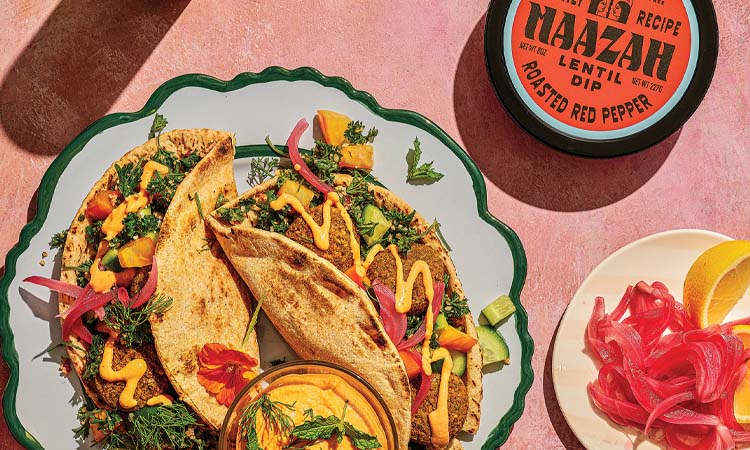

Roseville-based chutney sauce maker Maazah is launching this fall in 500 Whole Foods stores across the U.S. and 20 Costcos in the San Francisco area. That might seem like a golden ticket for a bootstrapped brand that was selling at farmers markets just a few years ago, but as co-founder and CEO Yasameen Sajady points out, scaling to the Whole Foods level is expensive. “You have to buy all the ingredients upfront. We’re working with new suppliers who want to be paid now. We’re just building these relationships.”
Maazah closed a $1 million seed round over the summer, but Sajady is already gearing up to raise more. After years of fine-tuning, participating in accelerator programs like Kroger’s Go Fresh & Local, and growing from farmers markets to co-ops to Target, she’s hopeful the brand is finally hitting a retail volume that will open the door to better margins. But, she admits, “it’s always uncomfortable.” She ticks off the ways: going through three co-packers (third party companies that package products) in a year; getting picked up by major grocery stores, only to find that you have to pay for visibility on shelves; refining recipes again and again to get to a price point consumers will accept.
“You have to be really intentional about asking for guidance and really looking inward, because every three to four months, something is changing,” Sajady says. “You have to take those big swings, and you don’t know where they’re going to lead.”
The need for cash grows more intense as food brands scale, says Allison Hohn, executive director of Naturally Minnesota, a nonprofit that works to elevate natural and organic food businesses. “CPG is cash-heavy upfront, but people don’t realize how continuously cash-intensive it is. It’s also a longer time horizon for returns on investment,” which makes it harder to find a keen investor, she observes. “It makes scaling challenging.”
But it does happen. In Minnesota, food founders tend to hold up Angie’s Boomchickapop as their inspiration.
Angie and Dan Bastian’s story is the stuff of CPG legend: The Mankato couple started selling popcorn at farmers markets in 2001 and steadily gained traction. They took on private equity in 2011, sold a majority stake in 2014, and then spent another three years doubling the value of the company before finally selling to Conagra in 2017 for $250 million.
“I do think it’s gotten far more difficult in a lot of ways,” Angie Bastian says, pointing to the less favorable market conditions today and also the pressure that comes with the higher visibility of successful entrepreneurs—on podcasts, TV, social media—making some founders think starting up is a fast path to wealth. “For us, in the beginning, it wasn’t about the endpoint of selling and getting rich. It happened incrementally.”
Inflation, which has been particularly acute at the grocery store, has only exacerbated the challenge of growing a food startup today, says Bastian, who chairs the board of Prospera Foods, a nonprofit that supports farmers in Central America.
“Grocers are just trying to survive,” Bastian says. “They’re going to choose the simplest, easiest relationships to keep the shelves stocked, and that’s a disadvantage for startups.”
“For us, in the beginning, it wasn’t about the endpoint of selling and getting rich. It happened incrementally.”
—Angie Bastian, Angie’s Boomchickapop
Space for Big Ideas
Minneapolis-based Gustola Granola went on indefinite hiatus last year, pulling out of more than 200 local and regional stores. “Grocers were shocked,” says founder Angela Gustafson. What little margin she had been bringing was starting to evaporate as inflation caused price spikes in every step of the manufacturing process, from ingredients to shipping. “When you start to go over $10 for a bag of granola, it’s just not going to sell.” The only way forward, she realized, was to scale.
Read more from this issue
But growing Gustola beyond Minnesota proved to be a challenge. “I wasn’t doing anything earth-shatteringly innovative,” Gustafson says candidly. “We were another granola. One of the best, I’d argue, but if I were buying for a grocery retailer five states over, I’d probably want to support a local brand instead of ours.”
It’s true, says Kowalski’s Markets CEO Kris Kowalski Christiansen. Something has got to stand out about your product, be it the flavors, the story, or the local ties.
“We get a lot of people who have fabulous salsa or fabulous barbecue sauce, and I’m sure their family and friends love it,” says Kowalski Christiansen. “But you have to consider, ‘How is mine going to stand out?’ You have to go look at a shelf space and see how many competitors you really have to deal with.”
As a chain of 11 stores, Kowalski’s can be nimbler about supporting small brands than some of the national chains can, and the Woodbury-based grocer knows that customers care about supporting local—to a point. “It starts with what your product is and what need your product is fulfilling,” Kowalski Christiansen says.
Gustafson never raised money for Gustola. She had no staff. “The reality is you have to have something truly unique to scale nationally.”
Jennifer Quie leads General Mills’ Emerging Brand Center of Excellence, which includes 301 INC, the company’s venture capital arm; G-Works, a corporate venture studio that works to build new food businesses internally; and a growth equity fund, which acquires and scales high potential brands. General Mills also operates GoodWorks, a pro-bono program that helps Twin Cities entrepreneurs strengthen and scale their businesses.
“The funding environment on food continues to be constrained, but there are always going to be high-demand spaces.” Quie says. “We’re highly interested in big ideas.”
That doesn’t necessarily mean inventing a truly original product. “Not all innovation is going to be overly novel,” Quie says. “There are still problems we see that need to be solved, and there is room for startups to solve them.”
That’s Maazah, says one of its investors, Reed Robinson, founder of Minneapolis-based Groove Capital. “I can’t imagine a large national grocer seeing the vision to introduce a delicious chutney.” The Sajady sisters, Yasameen and Sheilla, are first-generation Afghan American co-founders, and Maazah was inspired by their mother’s recipes. (The name means “flavor” in Farsi.) Maazah’s mission goes well beyond chutney. “We want to reimagine Middle Eastern food,” Yasameen Sajady says. “We’re thinking about what we are besides these chutneys—how we want to look on the shelf, how we share our story.”
Less Money, More Grit?

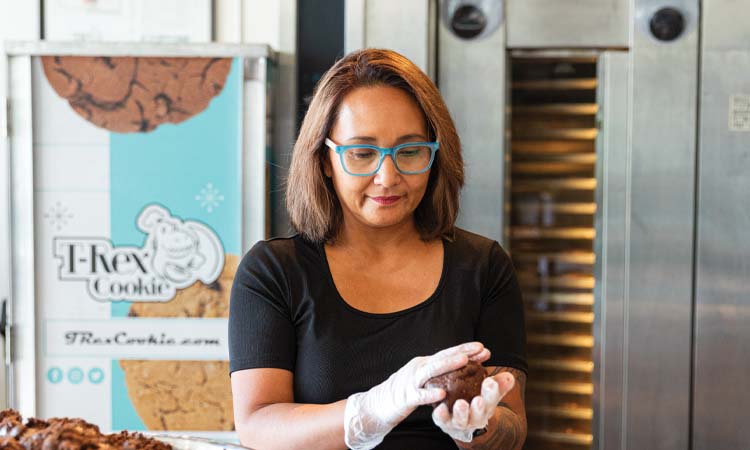
National grocery presence isn’t the only path to success in packaged foods. Tina Rexing, founder of Eagan-based T-Rex Cookie Co.—known for its giant half-pound and 5-pound cookies—has been selling her frozen dough at local and regional grocery stores since 2021. T-Rex is still in the freezer case at Cub, Kowalski’s, and Lunds & Byerlys, but this year, Rexing made the decision to pull out of Target and Michigan-based Meijer.
“If you want to stay on the shelf in any grocery store, you have to spend money,” says Rexing, who has been in the cookie business since 2015 and operates T-Rex retail shops in Eagan and at the MSP airport.
For now, Rexing is focusing on other avenues of growth, such as food service distribution of her frozen dough and wholesaling individually wrapped T-Rex Cookies to U.S. Bank Stadium, Xcel Energy Center, Orchestra Hall, and a number of other entertainment venues. Rexing, the sole owner of T-Rex, is trying to raise capital to grow this side of the business rather than pouring more money into distribution and slotting fees in the frozen foods aisles of major grocers.
“There’s so much potential in those event spaces, as well as the restaurant spaces,” says Rexing, still hopeful after nearly a decade of trying to take her business to the next level. “It’s not for the faint of heart,” she adds. “I’m starting to learn that.”

CPG is filled with “10-year overnight success stories,” says Erik Brust, the co-founder and CEO of one of Minnesota’s fastest growing food startups, JonnyPops. Brust and co-founder Connor Wray started the company out of their dormitory kitchen at St. Olaf College back in 2011. They worked steadily to get to where they are today, a national brand sold in more than 25,000 stores, with its own manufacturing facility in Elk River.
“If we were given a bunch of money early on, we would not be a company today,” Brust says. “People often think they can come up with the right product initially or raise enough money to do it faster. It’s rarely true. My advice to anyone who wants to start a food company is you need to be hyperfocused on product and on growing the business—one successful consumer and store at a time.”
Still, Robinson of Groove Capital believes the Twin Cities needs a focused early-stage food fund to support the high level of interest and products from local entrepreneurs. “We have the talent, the distribution, the retail and brand expertise, and an abundance of great new CPG products,” he says. “But it’s true that this town is a food investing desert. My hope is that we can bring equilibrium to the demand from startups and the supply of capital.”
Advice from Former Food Founders
 The cost is steep, the barriers are high—but food is fundamental, and the possibility of making it with a recipe all your own compels entrepreneurs to keep trying. Shutting down doesn’t mean you’ve failed. Four former Twin Cities founders share hard-learned lessons that will inform their future ventures.
Know your why
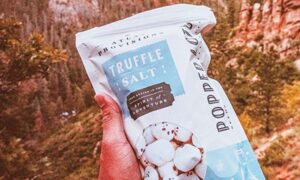
“You have to do it because you love it, not because you think you’re going to get rich,” says Sarah Pritzker, who shut down her Minneapolis-based Atlas Provisions snack brand in 2020.
No shortcuts
“You need to be prepared: It’s a long, grueling haul,” says Ryan Rosenthal, who recently shut down healthy convenience brand Simpls after a decade in business. “And you’ll likely be unprofitable most of that journey.” 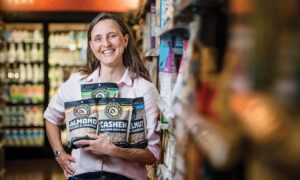
Consider the category
Are you in a space ripe for innovation, or are you going against several well-established national brands? One of the reasons Angela Gustafson stopped producing Gustola Granola was because of the numerous national and indie competitors, which made breaking out that much tougher.
Beware of unique
“Being really unique is a double-edged sword,” says Pritzker, whose Atlas Provisions made popped lotus seed snacks. “But because it was so novel, it was tough to find anyone with knowledge of how to manufacture.”
Know when to fold
“I used to wake up seeing endless opportunity,” Gustafson says. “When I got to the point where I was just like, ‘this is impossible,’ that was the end.”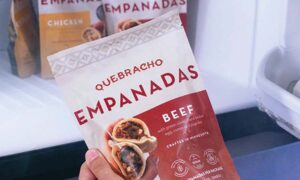
Shutting down isn’t a negative
“My mind immediately went to, ‘holy cow, look at the 50-plus new skills I now have,’” says Belén Rodríguez, who recently shuttered Quebracho Empanadas. “Think of it as a way of knowing what to do next time. Some funds don’t even want to work with first-time founders.”