Organization of the Year: Every Meal
In Minnesota, one in seven children face hunger, according to Feeding America. The nonprofit Every Meal, based in Roseville, was created to help children get “nutritious, delicious, and relevant” food for the weekends.
Rob Williams founded Every Meal in 2010 as a collaboration with Mill City Church in Minneapolis and Woodridge Church in Medina. A Mill City congregation member, Williams learned from the principal at Sheridan Elementary School in Minneapolis that children would take extra food during lunch on Fridays as the weekends approached.
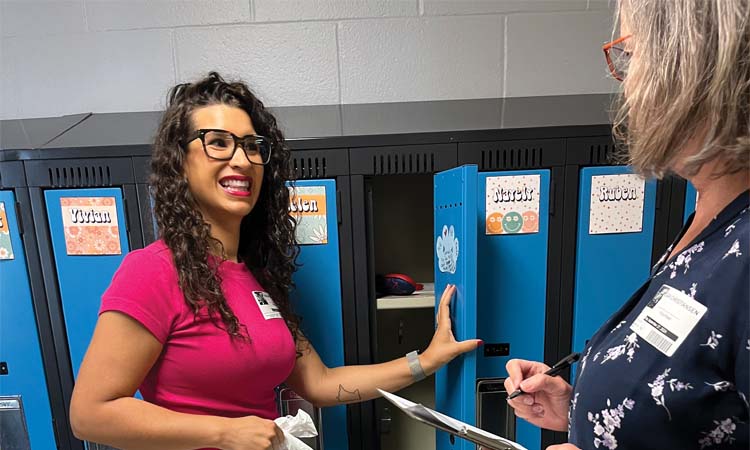
These same children were having behavior issues while at school leading up to the weekend because of the instability they faced at home without food. (The Sheridan school is now Las Estrellas Dual Language School.)
Williams decided to help. Every Meal started with 27 kindergarten students at Sheridan. Over the next three years, Williams figured out how to source, store, and package food, launching the program more broadly for the 2013-14 academic year. Five schools were involved in it at the beginning of the school year; by the end of the school year, 13 were taking part.
Now, Every Meal, a freestanding nonprofit, expects to provide weekly meals to more than 12,000 children, Williams says. Every Meal is based out of a 69,000-square-foot warehouse in Roseville that it recently purchased as part of a $13.4 million fundraising campaign.
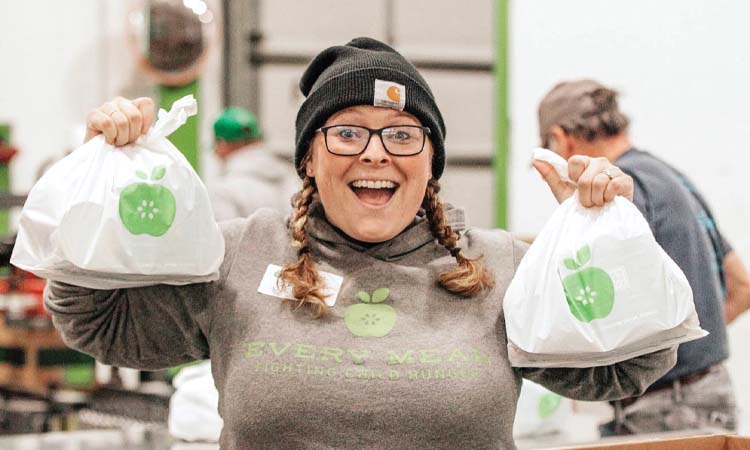
What began as a project of two churches has become an important nonprofit upon which thousands of children rely for their basic food needs. Every Meal employs 24 staff members and deploys more than 3,000 volunteers to do its vital work.
“We engage with our wonderful volunteers to assemble the bags of food, create delivery orders, deliver the food to the schools, and distribute the food at the school to the children by putting our bags of food into the students’ backpacks in their lockers while the students are in class,” Williams says.
There are five different food bag types, with four meals in each bag. Colors identify the types: The blue bag is tailored to an East African diet, orange is Latino-centered food, purple for Southeast Asian, yellow has ready-to-make meal options, and green contains a variety of foods.
“We were learning a lot more about the issue of child hunger in our community. It’s a pretty hidden thing. Someone has to tell you,” Williams says. “Even teachers have to kind of put the pieces together if there are kids behaving [a certain way] on Fridays.”
Mill City Church has worked with Every Meal since the beginning. Stephanie O’Brien, the lead pastor at Mill City Church, says Williams helped start the nonprofit with other congregation members. She remembers what it was like in its infancy in 2010.
“It’s been amazing to see something go from just one classroom to one school, to a few schools, to making such a big difference in the whole state, and I think we feel so encouraged by something like that starting small, that had the potential to do so much more with somebody being willing to take it and invest in what it could be,” O’Brien says.