
Long-Term Impact: Washburn Center for Children
For over a century, Washburn Center for Children has served on the front lines for children and families in need of mental health services, and the need keeps mounting. When the pandemic struck, the center’s waitlist increased fivefold, an increase that has not yet peaked, says CEO Craig Warren. “It’s getting higher and higher and higher. So the tail on the negative consequences of Covid for kids—from a mental health perspective—that tail is still a pretty strong tail; it hasn’t really tapered yet.”
Founded in 1883, Washburn serves as a safety net for children and families with mental health needs. The nonprofit has three independent locations and partners with 60 schools across the Twin Cities metro, as well as three hospital and clinic systems. It serves about 3,800 children and provides more than 80,000 hours of therapy annually. Washburn therapists also deliver services in homes, hospitals, and neighborhoods across the region.
In 2024, the center’s goal is simple: to deepen its ability to serve the rising demand for services within the community. To meet this goal, Warren says taking care of staff is paramount. Burnout rates are high among mental health professionals, and staff at Washburn often take on immensely difficult cases.

Staff members need to be able to take time off in addition to having sick time to care for themselves or their families, Warren says. He adds that Washburn’s staff is 90% women. “A lot of them have kids in their lives, and they’re taking care of kids who are traumatized, who’ve been through tough things. … That secondary trauma experienced on the job is very, very, very, very real for us.”
Not only has demand risen, but cases have also become more complex, Warren says. An example of a complex case could be someone who needs mental health services but is also unhoused. On top of that, the person could have a substance use disorder and their therapist might suspect they are being trafficked. “That’s a tough case, and then the system is not designed for that,” Warren notes.
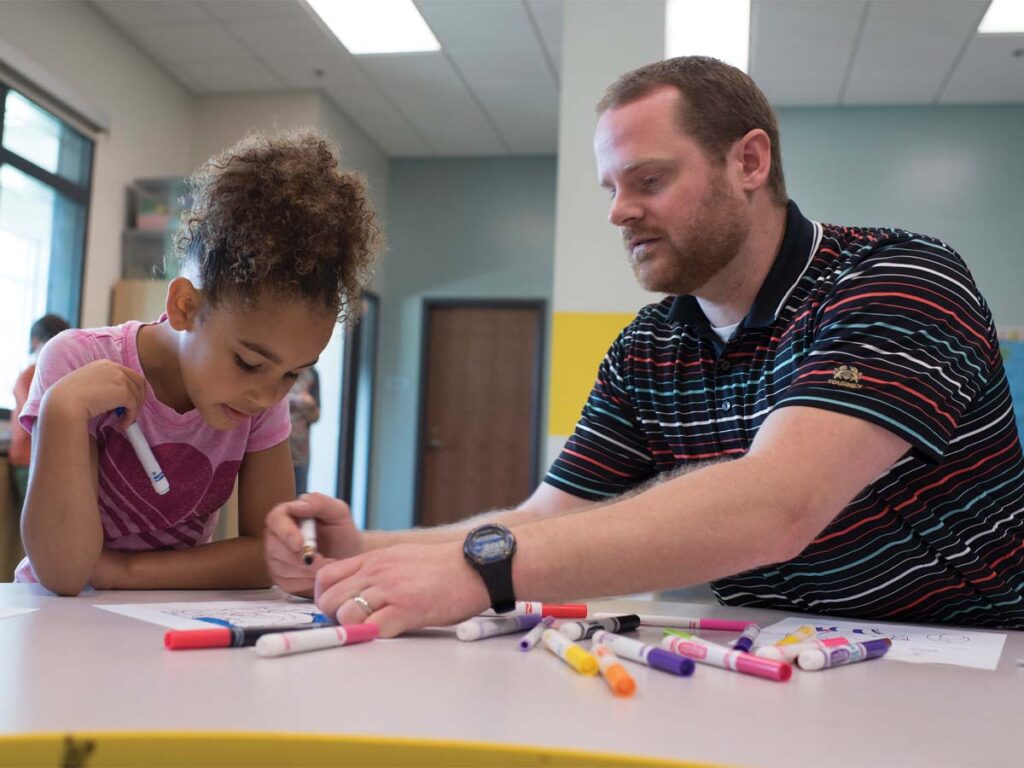
Setting therapists up for success—particularly with children and families coming from backgrounds different than their own—is key to caring for both the child and the therapist. Among its many training programs, Washburn provides a “foundation in seeing complexity” course for new staff within their first six to 12 months on the job. The center also holds talks around equity, diversity, and inclusion.
But it’s important to also do the “fun stuff,” which could be as simple as playing Dungeons and Dragons at lunchtime, Warren says. “We’re dealing with hard things and holding an overabundance of hope on behalf of our clients. That takes a lot of energy to hold that overabundance of hope on behalf of a family and a child who may not have that.”