Innovations in Philanthropy: Constellation Fund
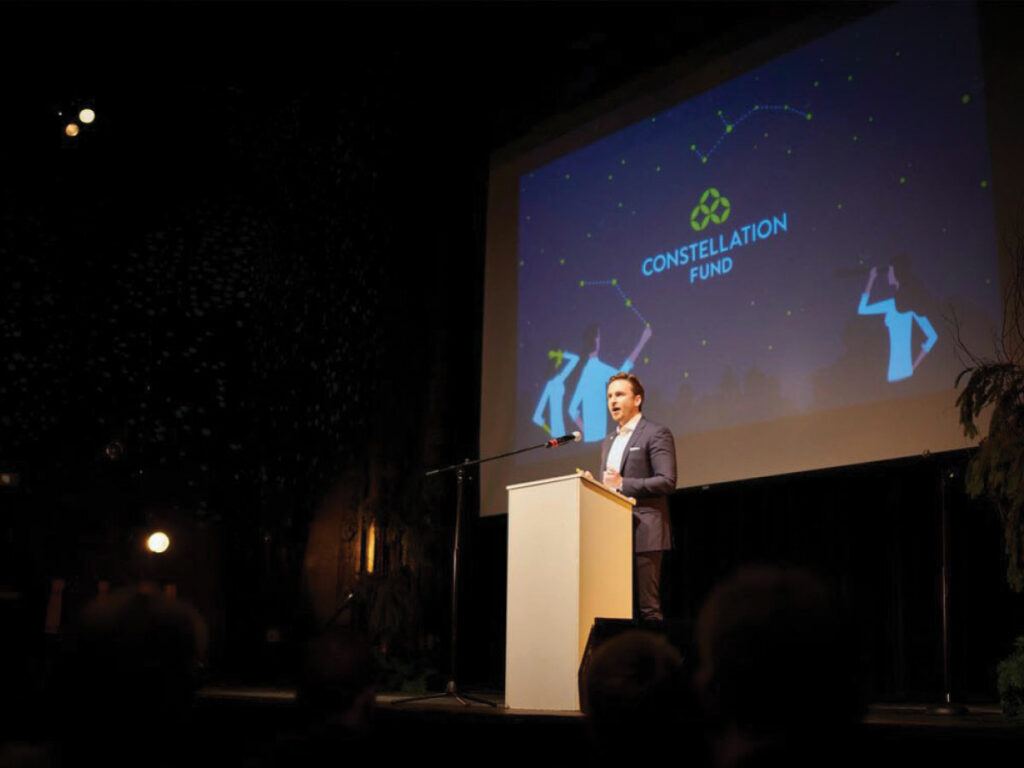
Andrew Dayton, founder and CEO of the Constellation Fund, says his organization operates under a “venture philanthropy model.”
He notes that it bears some key similarities to venture capital firms, which “do a ton of diligence on the front end to identify an entrepreneur who is on to something,” he says, and who could create substantial value in the marketplace.
In Dayton’s case, he’s not looking to invest in a for-profit business; he wants to invest philanthropic dollars in nonprofits that can have a transformative effect on tackling poverty.
Dayton, who first learned about philanthropy from his wealthy parents, former Gov. Mark Dayton and Alida Rockefeller, was driven in 2018 to create a new foundation that would leverage data and evaluations to carefully determine which nonprofits could produce the best results.
Instead of helping poor people stay afloat with some financial assistance, Dayton focuses on funding nonprofits that can help people increase their incomes and improve their health outcomes so they can move out of poverty. The foundation supports nonprofits that address education, housing, health, and employment needs.

For the fiscal year ending in June 2022, the Constellation Fund awarded grants to 29 nonprofits totaling about $3.4 million. The Constellation Fund completed another funding round in November, with an average grant size of $146,538.
Before nonprofits can secure funding, they undergo a rigorous evaluation process that takes several months. The fund’s staff work with nonprofits to improve their ability to collect data to help measure outcomes for clients. That, for example, could mean measuring the number of clients who earned academic degrees or increased their income by landing a better job. The foundation staff includes a chief economist.
Dayton says his foundation wants to “write bigger and bigger checks” to nonprofits and give them unrestricted funding so they can determine how best to use the money.
Instead of making small grants to many nonprofits, Dayton’s emphasis is on awarding large grants to organizations that already are quite big or have the potential to increase operations with more funding.
Dayton says his staff also has sought applications from small, community-led nonprofits that are doing good work and deserve funding. Beyond awarding grants, he says, the Constellation Fund provides “capacity-building support” by tapping corporate volunteers to help nonprofits address legal and real estate issues, update strategic plans, and build databases.

Going forward, Dayton is excited about establishing a new research arm for the foundation called Constellation Lab. It will, for example, design and conduct its own longitudinal studies on the outcomes of poverty-reduction programs operating in the Twin Cities. That initiative will be funded through a multimillion-dollar gift from an anonymous donor.
Every fiscal year, the foundation raises money that it will give away as grants the following year. For the 2022 fiscal year, about $7 million was raised. “Our goal is to invest into top-performing organizations and to encourage investments in top-performing organizations,” Dayton says.