Half Measures
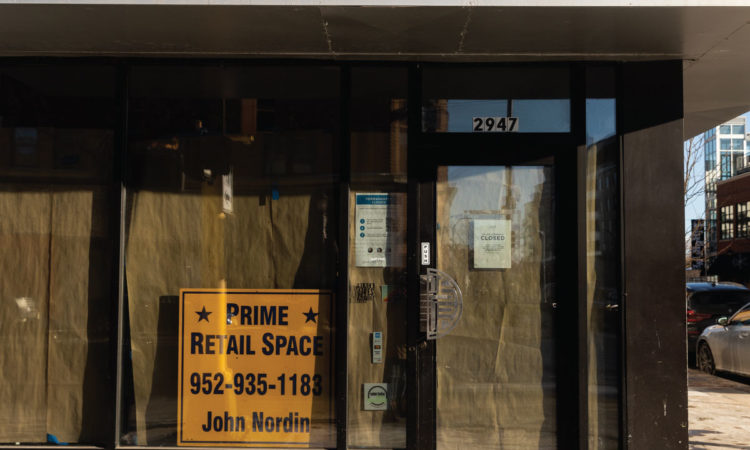
Last issue, I authored a piece in our Agenda section about Uptown—specifically, attempting to get behind why Uptown remains so beleaguered while downtown Minneapolis rebounds (in a limited way). The column sparked a lot of conversation on X (formerly known as Twitter), and most of it was predictable. Conservatives hammered away at the crime situation in Uptown while leftists took aim at landlords. (My article identified other phenomena as well, such as lack of leadership, parking, interest rates, and rent control.)
What struck me about the commentary was not that it was ideologically polarized—I mean, welcome to 2023—but that most of it acknowledged one strand of Uptown’s problems and ignored the others. A particularly prolific Minneapolis Twitter lib dug into landlord Jeff Herman’s claim that high city property taxes were untenably inflating rents. Herman’s claims were from 2021, and I repeated them because the article asked the question of whether Uptown was suffering from “market failure” due to the normal forces of supply and demand ceasing to function.
His assertion that taxes of $10 per square foot needed to come down were dissected. Herman owns a lot of property at Lake and Hennepin, and the critic went into county records and found that most of it is taxed at less than that rate, though one property had been that high.
The critic repeated a point that City Councilmember Lisa Goodman had made in the article: that landlords like Herman had redeveloped properties to attract national retailers like Victoria’s Secret and Gap, but those retailers could not drive the kind of volume in Uptown they wanted, so they left. Goodman believes it is landlords who need to take the financial hit; once they do so, and cut rents sufficiently, Uptown will again thrive.
My point is everyone has a self-serving take. Landlords see high taxes and crime as the bogeymen but don’t see their profession’s miscalculations as germane. The left sees capitalism run amok but refuses to acknowledge that the people they rise in endless defense of are causing most of the misery in Uptown.
Only the market can determine if Uptown rents may still be too high to attract tenants, and I’m not surprised that landlords exaggerate the impact of high taxes. Everyone speaks to journalists in hyperbole. But anyone who actually spends time in Uptown rather than pontificating from a laptop can see a host of other problems at work—problems that contribute to the inability to lease space.
Landlords may have to take a haircut. But given that so many of their properties lack tenants right now, it’s hard to argue that hasn’t already happened. Herman’s point was that the legacy of three years of rampant crime and business loss has emptied Uptown of vitality and fed a vicious cycle. Days after my article came out, there was a killing near the Lagoon Cinema followed by a second evening of gunfire in the same location so intense it made the front page of startribune.com.
My point is everyone has a self-serving take. Landlords see high taxes and crime as the bogeymen but don’t see their profession’s miscalculations as germane. The left sees it as capitalism run amok and refuses to acknowledge that the people they rise in endless defense of are causing most of the misery in Uptown.
In fact, it’s all of the above.
No complex problem has a simple solution. I should repeat it for emphasis. I could parse almost any major controversy facing the city, from the 2040 Plan lawsuit to Southwest Light Rail to downtown vitality, and the solutions proposed by ideologues consistently leave me wanting. Because ideology doesn’t seek solutions, it seeks theoretical satisfaction.
If we could create public safety in Uptown, it would still take half a decade to restore the neighborhood’s economic base. Minds don’t change easily, and small businesses won’t risk capital until they believe stability is in place. And the public will require a critical mass of attractions to entice them to return. (See this summer’s failure of the much-hyped Arts + Rec entertainment zone at Seven Points, formerly known as Calhoun Square.)
We are more ideologically divided in America than at any point in my lifetime. We also need solutions to difficult problems more severely than at any time in my lifetime. There are ideologues with good intentions in many of these debates, but they aren’t offering viable solutions because they see reality through a prism of belief, discarding facts that don’t suit their agendas.