 What’s this?
From Self-Sacrifice to Self-Care: Humanizing Nursing Education
In nursing, the culture of self-sacrifice runs deep—it’s a calling that demands equal parts strength and surrender, where compassion takes precedence over rest. These professionals pour their energy into every patient, finding just enough inner resolve to clock out and make the commute home.
But as the demands on nurses grow, so does the need for support systems that prioritize their well-being.
“In institutions where self-care is emphasized, nurses often experience lower rates of burnout which is critical for maintaining high-quality care,” says Cynthia Lee Dols Finn, professor at St. Catherine University’s School of Nursing (SoN). “A well-rested, mentally resilient nurse can more effectively engage with patients, leading to more thorough assessments, reduced medical errors, and better patient safety outcomes.”
At St. Kate’s Henrietta Schmoll School of Health Sciences (HSSHS), undergraduate health care programs are uniquely recognized for their holistic focus, blending meditative and reflective practices that provide students the strategies to enhance their own well-being—and, by extension, that of their patients.
Sean Fitzpatrick, dean of health sciences, says turnover rates continue to rise across health care, signaling a need to rethink training.

“We deliver this approach to our students in many ways: teaching self-care and stress management skills; providing them the knowledge and tools to evaluate and positively impact the ways a patient’s health intertwines with all aspects of their lives; and by our faculty and staff modeling these practices.”
Beyond the Bedside
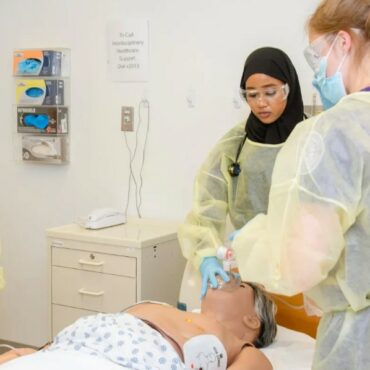
Courses like Foundations in Nursing and Holistic Care emphasize the integration of body, mind, and spirit in patient care. The Holistic Health Assessment teaches students a systematic approach to collect and analyze health data across a mix of patient groups, learning assessments that inform the holistic nursing process.
Through mindfulness training, stress management workshops, and self-care practices, Dols Finn says students note they feel more prepared to manage the emotional demands of their studies and careers. “Feedback often highlights that experiential learning builds students’ confidence in their clinical skills and decision-making abilities,” she says.
Reflecting on their experience, one student shares that the program’s greatest impact was teaching them how “you must reflect inwards and listen to what your mind, body, and spirit are telling you—to be an instrument of healing, you first have to start from within.”
Career Pathways in Care
A holistic focus that emphasizes compassionate care, personal growth, and patient-centered practices leads to greater job satisfaction,” says Joyce Perkins, professor at SoN. “Satisfied healthcare providers are more likely to stay in their positions and feel fulfilled by their work, which contributes to lower turnover rates.” Suzanne Lehman, dean of SoN, adds that the curriculum not only combats burnout, but also prepares a workforce better equipped to thrive in their roles.
“This approach strengthens retention, fosters a deeper commitment to the profession, and ultimately enhances patient outcomes,” she says.
Addressing the shortage also means forging strong alliances. Beyond affiliation agreements with major Twin Cities health systems, HSSHS and SoN collaborate closely with local providers, including the SMMART (St. Mary’s Medical and Rehabilitative Therapies) Clinic and Bear Care Health and Wellness Clinic. These opportunities help students gain training while making a difference for underserved patients.
St. Kate’s partnerships create pathways for working professionals to advance their careers by pairing existing experience with further education, reducing barriers like time and cost, and offering credit for prior healthcare experience, including non-degree credentials.