First Take: Stearns Bank President Heather Plumski
In St. Cloud, Stearns Bank has built a national reputation. Largely, it’s that of an anomaly—for both central Minnesota and the banking industry. It boasts majority-women leadership and ownership, is employee-owned, and has secured a niche in community-specific banking. Stearns says its Islamic banking services provider—Salaam Banking, opened last year—is the only national banking division designed to meet the needs of Muslim customers. The bank’s new loan and deposit office in St. Paul’s HmongTown Marketplace, too, caters to the ambitions and desires of the Hmong community there.
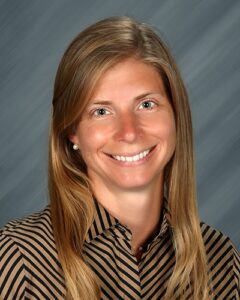
Stepping up to that reputation, Heather Plumski was announced as Stearns’ new president last month, taking over from Kelly Skalicky, who stays on as CEO.
“It’s an awesome and monumental moment for our banking enterprise as we have now exceeded $3 billion in assets,” Skalicky said in a press release, “that Heather will be the first president of Stearns Bank to take these reins after more than 60 years of my father and me in that role.”
Stearns has kept its rootsy ethos, with more than 35,000 small business customers nationwide, according to the bank. Among its many best-of recognitions by American Banker, it last year earned the Greater St. Cloud Development Corporation’s Innovation Award (in the for-profit category) for Salaam Banking, which relies on a team of Islamic scholars.
A Stearns veteran of more than two decades, Plumski previously served as executive vice president and chief financial and strategy officer, according to the release, overseeing development, implementation, and scaling of some of the bank’s most notable work, including Salaam and the bank’s online and mobile extension.
This conversation has been edited and condensed for clarity.
What has kept you with Stearns the past 22 years?
What’s kept me is the creativity that Stearns has at its core. We don’t think about things in a mundane way, or the way we’ve always done them. Every minute of every day, [we’re] challenging how we’re doing something, if it’s the continued right way to do it. What more should we be doing? It’s a continual evolution mindset, and so, not mundane—because I can’t do that.
Does a recent example come to mind of that continual evolution?
Myself and our chief [mergers and acquisitions] officer look at a number of different transactions [or] potential acquisition partners. We end up doing 1 out of maybe 400 or so that we look at. So, we’re not afraid to look at something new and unique, and certainly not afraid to execute if the interests of our partners align with ours.
One goal of the bank’s strategic plan for the next three to five years is to grow affordable housing lending. How did this become a priority?
That’s simple. We’ve been in the affordable housing space. Tax reform, with respect to low-income housing, came out in 1986, and we did our first transaction in 1987 [by contributing financing to the bank’s first low-income housing development]. So, the “Why?” is that we’re good at them. We’re extraordinarily good at them. And there happens to be a very strong need for housing of that nature across the nation. So, it had to do with the strength of our expertise, in housing programs in general but also in construction management. We have an in-house construction management department which allows us to navigate and support those transactions.
Speaking of that strategic plan, is there anything in it you would want to draw attention to, that might be especially relevant for growth, or will be particularly challenging in the next few years?
I would just call out the changing environment. We have a lot of things changing daily, by the minute. We have our head deep into watching how those things change and affect our priorities. But I think that is also where Stearns has shined in the past, in our ability to pivot. As the changes from the administration come through, we think about how those are going to impact the construction projects, our small business customers, any different aspects of operations for customers. … We run a lot of different scenarios—what-ifs, and that type of thing. We aren’t afraid to put in the extra work to make sure we’re preparing for what might be coming.
Is there anything you’re especially proud of regarding your work overseeing aspects of Salaam Banking?
The group of [Sharia law] scholars that that have come together [on the advisory board]—talk about a motivating, inspiring group of people. They’re extraordinarily knowledgeable. Their etiquette and articulation of really important aspects, but also what can seem very small—it can be a big deal. They are just very strong talents. So, being part of those conversations, listening—I’ve learned a lot. I have a lot of respect for our scholar group and, honestly, the pure grit and resilience. There’s been a lot of hills to climb, in creativity applied to solution options that are compliant in nature and get the job done. So, it’s been fun to be a part of.
What’s one of those small things that the scholar team pointed out, that ended up being a big deal?
The structure of a transaction, if you will. Because there’s some finite points. This is what our scholar board leads, in terms of what’s compliant in the Islamic faith. It’s relative to the structure of how, for example, a construction deal is put together versus even just a straight-up building acquisition.
What’s the biggest change you’ve noticed in banking since you launched your career, versus even just in the past five years?
I think the pandemic itself really gave banking a kick, a little bit, and forced some advancement in technology—which was already happening, but I think it advanced it in a way that has people thinking less “brick-and-mortar” about banking than they had. And it also advanced “non-banks” [financial institutions without a full banking license] and the ability for the average customer to understand what a non-bank is. I think it’s very difficult for the average person. The reality is, the two are very different in how they’re managed and regulated. So, for me, the more regulation, the more structure, the more security. I certainly would encourage everybody to know the difference and to know that, working with an actual bank, the criticism and the nature of their examinations are what make them strong and secure.
Is there a way that you might summarize your approach to leadership—any mantra you go by, or philosophy of leadership you’ll bear in mind as you go into this role of president?
It’s all about the people. The people that work for you, the integrity of those people, the energy—and putting joy in it. Those are the three words: If you’re not doing it with integrity, if you’re not doing it with energy, and enjoyment, then why do it? We have a very strong executive team, and they wouldn’t be part of that team if they didn’t exhibit those characteristics, either.