Farwell-on-Water Development Aims to Revitalize St. Paul’s Riverfront
A new mixed-use development in St. Paul aims to capitalize on the capital city’s miles of riverfront along the Mississippi.
The project, led by Edina-based Buhl Investors, is designed to bring residents together in the remote work era, and connect with the district’s history of art and industry right alongside the river.
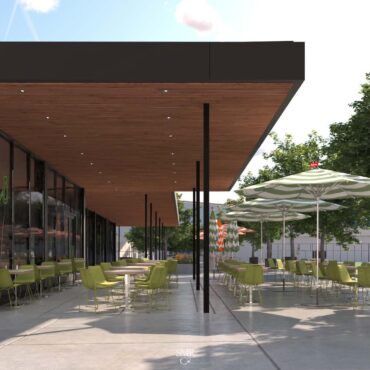
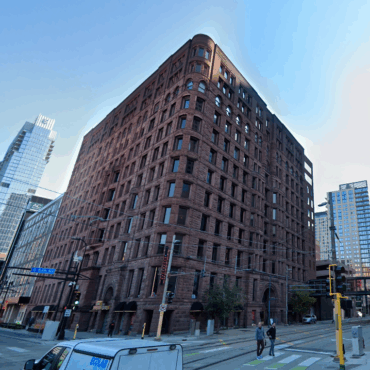
Farwell-on-Water features 384 apartments, more than 60 artist lofts, and leasable workspaces in the historic Farwell Ozmun Kirk & Co. warehouse, all across the street from Harriet Island Regional Park. The development also features a public green space — “Farwell Yard” — with plans for a ground-level restaurant and additional retail stores.
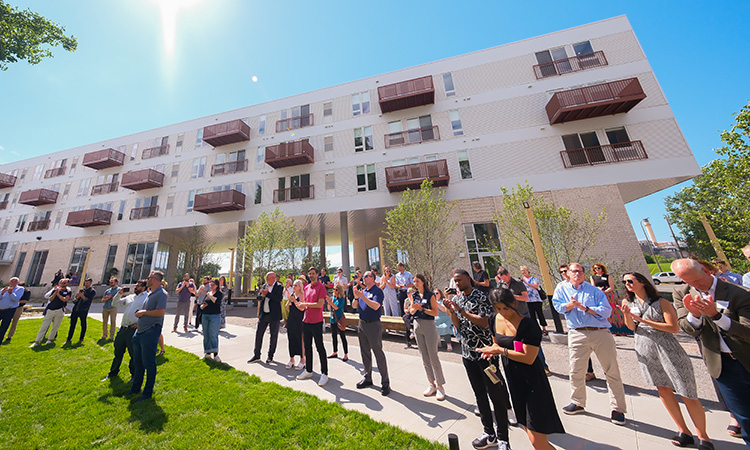
Despite having more miles of riverfront on the Mississippi than any other city in the nation, St. Paul has not historically based its culture and economy on being a “river city,” said St. Paul Mayor Melvin Carter at a grand opening ceremony Tuesday. Replacing a vacant building with mixed-income community housing in a way that “activates the riverfront” is an exciting addition, he said.
“There’s a requirement, there’s a responsibility for us to build new housing,” Carter said.

The development comprises three separate structures: The Harbourline building includes 63 income-qualified apartments, while Esox House is home to 221 market-rate apartments. The historic warehouse, meanwhile, has artist lofts and other workspaces for rent.
It’s too early to tell if Esox House will draw in those who work from home, said Buhl Investors’ Peter Deanovic, but the building is abundant with community spaces, not limited to a vinyl room, game room, and outdoor grilling area complete with a sauna, firepit, and a yurt.
The project also received a state grant to clean up the varnish plant on the site while retaining its history, Deanovic said. The buildings were also constructed in line with Sustainable Building 2030’s energy efficiency standards.
Farwell-on-Water also brings a new street breaking down a superblock that did not encourage walkability, Deanovic said. It could set the stage for Harriet Island reemerging as a more active service for the community, returning to the social and cultural mixing of the 20th century, he said.
“I think what we’re finding is that post-Covid, with that work-from-home movement, it’s so critical that we create community and create opportunities for people of all different walks to come together,” he said.
Shortly after purchasing the property in 2019, Deanovic was contacted by Ward 2 Councilmember Rebecca Noecker, who asked that the project be accessible and affordable for the existing creative community in the neighborhood.
The new buildings enhance artists’ experiences by providing ADA accessibility with elevators, which are not as common in buildings intended as art workspaces, Deanovic said.
Early in the planning stage, the community said they would like to see one-fifth of all units offered at 50% of the area’s median income to try and manage the risk of gentrification, he said.
Noecker said at the grand opening the mixed-use development was a “brilliant idea” and well-executed for listening to the West Side community and offering affordable housing.
The development at Farwell-on-Water will benefit the commercial and economic development of downtown St. Paul across the river, Noecker said.
“I am excited not just to see this development happening, to see the community that we’re going to build here, but to welcome a whole bunch of new neighbors to my community,” Noecker said.
The city of St. Paul created a $24 million tax increment financing district to enable the development, and used a further $10 million in ARPA funds to upgrade the sewer capacity, without which the project would not have been possible, Deanovic said.
“The city has been a really, really amazing partner,” Deanovic said.
The upgrades to sewer capacity will also benefit other developments in the area, and Deanovic hopes Farwell-on-Water can be a “conduit of success” just as the city helped the development, he said.
People who gravitate toward the community do so because of the convenience of accessing downtown, the “cultural hub” along Cesar Chavez Street, and proximity to nature, Deanovic said.
Esox House’s vinyl room features a wall of LPs from artists who performed at Harriet Island in its heyday, from Counting Crows to Bob Dylan to Whitney Houston. Deanovic said he had no idea of the significance of the Riverfest music festival in the late 20th century until the project began.
The project is unique for “honoring some of the past and trying to bring forward a bright future,” Deanovic said.