Fairview Rejects Merger Proposal with U of M, Essentia
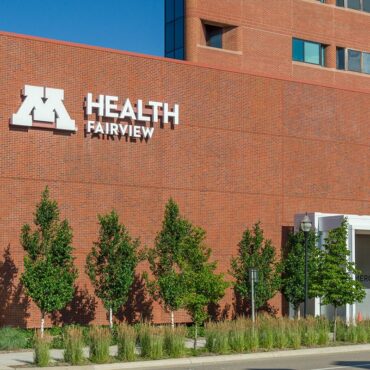
Fairview Health Services leaders on Wednesday said they “do not see demonstrable improvements for our patients and employees” under a new partnership proposal put forward by the University of Minnesota and Duluth-based Essentia.
In a letter sent to employees Wednesday, Fairview president and CEO James Hereford and chair John Heinmiller made it clear that they rejected the proposal that would merge the clinical operations of their organization, Essentia, and U of M.
“We have stated this clearly to the University: while we are open to a partnership, when it comes to a proposed merger between Fairview, the University, and Essentia – our answer is no,” Hereford and Heinmiller wrote. “We believe it is essential for Fairview to maintain our independence and commitment to the patients and communities we serve and to continue the improved performance that Fairview has achieved in the last two years.”
The letter defines Fairview’s priorities and is the latest chapter in what’s often been a challenging or tense relationship between the U and Fairview, who have been operating under a 30-year partnership agreement since 1997, when Fairview purchased the U of M’s hospitals. Under the current pact, which is set to expire at the end of 2026, Fairview supplies patients to university physicians and makes annual payments to the U. Just about a year ago, the university and Fairview had signed a nonbinding letter of intent that would see the U buying back its academic health facilities from Fairview. But that purchase never came to because the two missed a fall deadline to land on a definitive agreement, the Star Tribune reported at the time.
Then, in December, the U went on to make another offer to buy the University of Minnesota Medical Center, but Fairview rejected it a few days later, according to new reporting by the Star Tribune.
That’s when the university told Fairview it was looking into alternative options.
“At that time, we advised Fairview that, because of the urgency of needing to identify a solution, we were going to begin to explore other options,” the U of M’s VP of communications Chris Gade told TCB on Wednesday afternoon.
One potential option came in the form of an ambitious new framework with Essentia Health. In late January, the U of M unveiled initial plans to partner with Essentia. At the time, the two organizations said they intended to create a new nonprofit entity they believed would better serve patients and future doctors. Fairview leaders were apparently caught off-guard by the proposal, saying they had not been provided with more details.
On Monday, however, the U sent a six-page document to Fairview outlining key aspects of the deal. In it, university leaders said they proposed to combine the clinical enterprises of the U, Essentia, and Fairview into a “single, unified organization.”
The U described the merged entity as “Newco,” a corporate term sometimes used for a new organization that doesn’t yet have a name.
The new entity, the U said, “will be dedicated to advancing the health and welfare of all Minnesotans; the University’s land grant mission of health-related education, research, and unique care; and Essentia’s and Fairview’s historic missions of providing high-quality care to rural, suburban, and urban communities.”
“Creating Newco also is needed to stabilize and assure the future success of UM’s academic health center, and thus help ensure a continued source of well-trained physicians, nurses, and other health professionals to serve the residents of Minnesota and the surrounding region,” the U said in the proposal.
The proposal confirmed that the U and Essentia would commit $1 billion to “enhance Newco operations during its first five years.” The proposal stated that Newco would be overseen by a board that would include six appointees apiece from the U of M, Essentia, and Fairview, alongside four independent appointees.
The merged entity would become “the most comprehensive health care system serving Minnesota—the system with the broadest geographic coverage and reach, serving the most communities, and offering a complete range of care from basic primary care through the most complex, multispecialty care,” according to the proposal.
The document noted that “Essentia and [the U of M] will speak with one voice in negotiating with Fairview. We are prepared to move forward on a relatively rapid timeline.”
In their letter to employees, Fairview leaders did express openness to some level of partnership with a new health system, though they rejected merger plans outright. “We agree that the Medical School is an essential component of the healthcare ecosystem in Minnesota – and that Fairview should not be alone in supporting their mission,” Fairview’s leaders wrote. “Essentia has now indicated a willingness to support the University. We believe this is a good development. As we have said, our current level of financial support for the Medical School is unsustainable.”
The U of M’s Gade said that Fairview’s leadership has not yet provided a counteroffer to the university’s current proposal. But the U remains open to conversations with Fairview, he said. “We believe there remains significant opportunity to build that bold, shared solution, and we welcome the conversation to do it,” Gade said.