Clean Energy’s Impact on Minnesota’s Economy
Unfortunately, the climate doesn’t stop changing when the global economy takes a turn. But Minnesota has continued to outpace the national push for a carbon-neutral economy, according to a recent report.
Minnesota is outranking the national average when it comes to many clean energy milestones. Zero-carbon has provided the majority of Minnesota’s electricity generation for the third year in a row. In 2022, zero-carbon accounted for 55% of the energy supply, well above the national average of 41%, according to the 2023 Minnesota Energy Factsheet produced by Clean Energy Economy MN and the Business Council for Sustainable Energy. The report, which was released Wednesday, outlined data collected by the American Council for an Energy-Efficient Economy, BloombergNEF, and the Minnesota Department of Commerce, with support from the McKnight Foundation.
While there’s been momentum in the clean energy industry space, the report noted the industry is not immune to challenges. The war in Ukraine led to instability that led to gas, natural gas, and other commodity price increases. Grid congestion also impacted electricity grid projects. Supply chain shortages, solar tariff cases, and workforce shortages meant less overall growth in renewable energy installation.
The workforce still hasn’t recovered from Covid. While the clean energy sector employs nearly 58,000 workers in the state—an increase since 2021—the total clean energy workforce is still below the pre-pandemic peak of nearly 62,000 workers.
Despite these challenges, president of the Business Council for Sustainable Energy Lisa Jacobson said Minnesota’s economy is now “locked in” on clean, sustainable growth that will reduce emissions and create jobs.
Policy and market factors have driven Minnesota’s continued investment in renewable energy generation, according to the report. State and national policies have continued to place further emphasis on reaching a carbon-neutral economy.
One policy update that stuck out in the report was Minnesota’s Climate Action Framework, which was adopted by the Walz administration in September and details goals to adapt to climate change and decrease greenhouse emissions within the state’s economy. The goal for the state is to have a carbon-neutral economy by 2050.
Transportation is the sector that is the focus of the Climate Action Framework as it contributes the most greenhouse gas emissions in Minnesota’s economy. Minnesota addressed part of this in 2021 when it became the first state in the Midwest to pass a “clean cars plan,” which would implement standards that set limits on manufactured vehicle emissions. Enforcement of the rule is set to begin with vehicle model year 2025.
While the clean cars plan would make a significant difference in the state’s largest source of emissions, this administrative decision has been politically polarizing, the report noted. In 2022, the Minnesota Automobile Dealers Association sued the state in an attempt to prevent the implementation of these rules. Auto dealers say customers don’t want electric and low-emission cars and the rule would leave dealers with unsold inventory as buyers went elsewhere. Despite this opposition, the Minnesota Court of Appeals upheld the state’s plan in January.
Now the Climate Action Framework plans to create a statewide electric vehicle plan. Funding for this includes part of the $47 million Minnesota received in the national settlement with Volkswagen over emission standards, which can be spent on funding direct vehicle replacement or charging infrastructure.
Here are some additional highlights from the report:
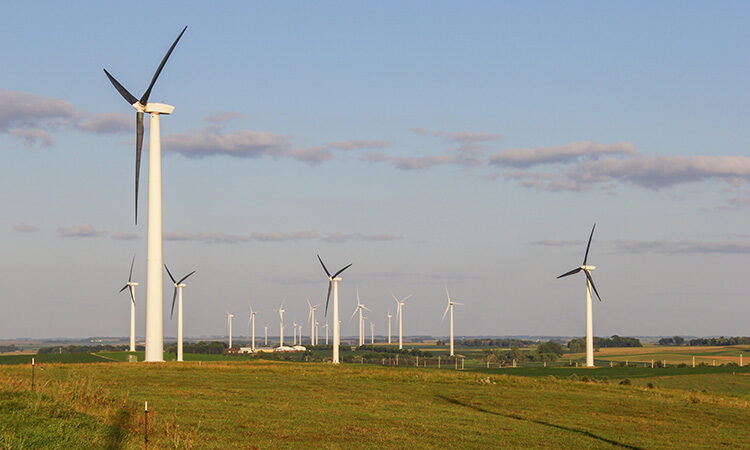
- In 2022, wind was the largest renewable energy source at 24% of all power generated, and it was also the second largest source overall, behind coal and in line with nuclear power. But this year’s largest industrial project announcement was in solar. The Minnesota fuel refinery, Flint Hills Resources, is developing a solar array connected to its Rosemount facility that’s expected to be the largest direct use of solar energy in the country.
- In the last 10 years, no new coal-fired power plants were built in the state, and renewables accounted for 81% of all new capacity. All other additions were natural gas and oil plants. In 2022, Minnesota built primarily renewable power plants. The state plans to retire all coal plants by 2035. These shifts have led to a 50% fall in carbon dioxide emissions in Minnesota since 2005.
- Renewable technologies provided nearly one-third of Minnesota’s generation in 2022. Over the last decade, renewable generation has risen by 75%.
- Minnesota has slashed energy imports by more than half with 9% of energy imported in 2022, compared to 25% a decade ago.
- Renewable power sources account for 81% of all new power-generating infrastructure built in Minnesota in the last decade.
- In 2022, wind and solar accounted for 96% of new generation capacity added in Minnesota.