
 What’s this?
Building Success, Brick by Brick
It feels warm, familiar—familial, almost— strolling down the cobblestone sidewalk that lines the Mississippi from the Stone Arch Bridge to Hennepin Avenue. Saint Anthony Main has a certain je ne sais quoi to it, particularly in the late summer and early fall months, and you could say that Aster Cafe has a little something to do with the influence. It’s Parisian in its understated elegance—you probably didn’t know, for instance, that it’s the oldest brick building in Minneapolis. Or that its kitchen is in the basement and there is no open flame. Or that owner Jeff Arundel (who also owns neighboring Jefe Urban Cocina) has leaned on Bridgewater Bank for his lending and business banking needs since 2010, the year Aster opened its doors.
“As an entrepreneur, I’ve owned a few different small companies and I choose them as my banking partner because I have faith in them,” says Arundel. “They’re like a temperature check for me … If they’re not interested in something, then I’m not interested. They’ve been a great sounding board for me through the years.”
Arundel and a local developer were looking for financial backing to help them carry out a deal when he was introduced to Bridgewater Bank’s founder and CEO Jerry Baack.
“I called Jerry on his cell phone, and his answer was ‘give me the address [of the business] and I’ll drive over there and look at it on the way home,’” he recalls. “I thought, I’ve been around banks a long time and that’s the greatest answer I’ve ever heard—I felt like I was in Mayberry R.F.D.! And since then, we’ve been good friends and good partners.” Arundel adds that his entire family banks with Bridgewater. His son’s landscaping company goes through them now. He’s even recommended Bridgewater’s services to his own clients.
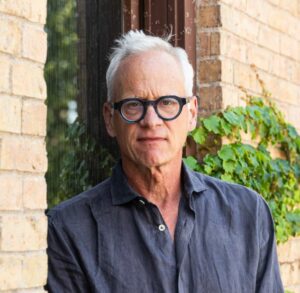
“Jeff knows that between me and Jerry, he has direct access to our decision makers, something you tend to lose with larger banks,” says Tony Ferraro, managing director of commercial banking. When your businesses are synonymous with Minneapolis culture, getting ahead of the competition is critical to survival. “The hospitality business is a very complicated riddle here,” says Arundel. He just launched Aster House, a restaurant, bar, and live music venue (with a lower level private club coming soon) one block northwest of Aster Cafe. While Aster House will play host to local and national music talent, Arundel says it’s intended to be very menu-forward with live music as a key part of the energy on the Minneapolis riverfront.
“It’s going to be more muscular [than Aster Cafe], it’s going to have a real kitchen, and I’m leading the overall design,” he adds. Ferraro says that Arundel has always had a knack for identifying business opportunities. “He’s a great visionary who has an amazing ability to create really interesting concepts for far less cost than many others would be able to do.” He says this is most evident in Arundel’s current restaurant portfolio, the work he’s done with the Minneapolis Club, and a unique home he once owned in Minneapolis. “He’s a great guy, well-liked by his employees, and he knows how to run profitable restaurants—a very tough business to be in.”
Arundel credits his success to leveraging his strengths and knowing when to seek others’ expertise. “The people that I know who have achieved the most knew what they weren’t good at,” he says. “Owning the stuff we are not good at can create a win.”