Australian Med-Tech Firm to Open Minnesota Office
While scores of businesses scale down their office footprint, one Australian med-tech firm has announced plans to open an office on the other side of the globe.
Melbourne, Australia-based digital imaging company Optiscan Imaging Ltd. on Monday said it will open its first U.S. commercial operation in Minnesota. Though the company hasn’t picked out a specific location quite yet, the plan is to open an office somewhere in the Twin Cities metro.
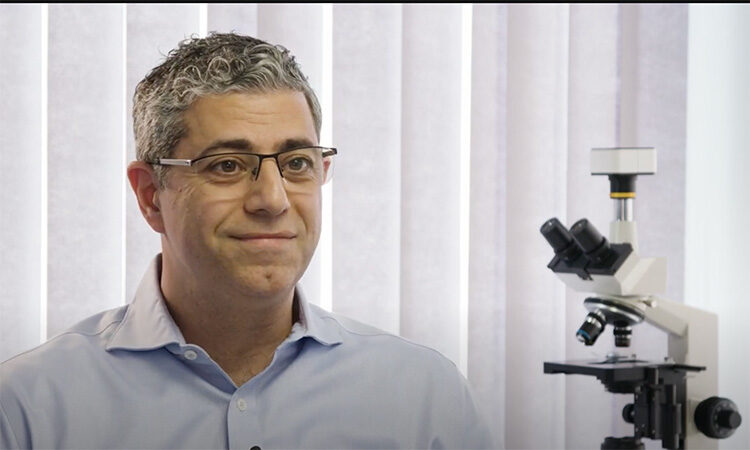
Optiscan is a manufacturer of “endomicroscopic” digital imaging technology, which enables physicians to scan patients at the cellular level in real time, according to the company’s website.
How exactly did an Australian company land in Minnesota of all places? Optiscan CEO Dr. Camile Farah said it all stemmed from a med-tech conference he attended in Boston last year. MTPConnect MedTech, an Australian industry group, sent a delegation to the AdvaMed conference and arranged one-on-one meetings with top brass at the Minnesota-based Medical Alley Association.
Farah had a chance to chat with Medical Alley VP of intelligence Frank Jaskulke and global principal Kylle Jordan at the Boston conference.
“Frank was very quickly able to articulate the essential catalysts required to boost our company and allow it to expand into the U.S. market,” Farah said in an email. “Frank was very precise about the essential building blocks that Optiscan would need to move ahead and that was perfectly in line with our internal assessment of the fundamentals that we thought were also required.”
In a news release issued Monday, Farah added that “our partnership with, and membership of, the Medical Alley and new commercial hub in Minnesota, puts Optiscan at the epicenter of health innovation and care.”
For now, Optiscan plans to hire just one full-time employee in Minnesota, but the company expects to add more as the business grows.
Longstanding partnerships between the med-tech sectors in Minnesota and Australia certainly played a part in Optiscan’s decision, too. Jaskulke noted that Medical Alley has been working to develop those partnerships for years. “We’ve done the work to build them up,” Jaskulke said in a Monday interview. “This has been part of our international strategy. We’ve gone out and looked around the world for clusters of health technology and medical technology companies that align with the capabilities here.”
Australia has been “No. 1” in that regard, Jaskulke noted, though Medical Alley has also found pockets of med-tech firms in places like Denmark and the Netherlands.
Though Australia is home to several med-tech companies, its smaller population size generally necessitates a search for business on other continents, Jaskulke said. Australia’s population is around half the size of the state of California. “If you’re going to build a company [in Australia], you’re eventually going to have to export,” he said.
Optiscan is not the first – or likely the last – Australian med-tech company to set up shop in Minnesota. Seer Medical, an epilepsy diagnostics firm based in Australia, opened its first U.S. office in Rochester last year, for instance.
For Jaskulke, it’s not hard at all to sell Australian companies on Minnesota. He listed off the medical giants here, for one: Medtronic, Mayo Clinic, and plenty of others. Plus, Minnesota’s central location makes it more convenient for companies to visit other parts of the country.
“If it’s a health care or health technology company, it’s a relatively easy pitch to make,” Jaskulke said.