ANI Pharmaceuticals Banks on Rare Disease Business
Amid the dozens of publicly traded firms in Minnesota, Baudette-based ANI Pharmaceuticals Inc. often flies under the radar. The pharmaceutical company about five hours north of Minneapolis has grown largely by focusing on the market for generic drugs. In its most recent quarter, for instance, generics accounted for nearly 70 percent of the ANI’s revenue.
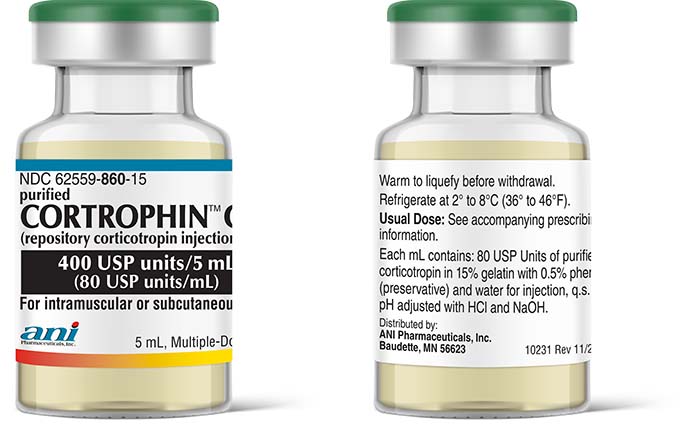
That may be changing in the near future, though. With FDA approval secured, the company is now betting on an obscure drug for rare diseases: Cortrophin Gel, which is used to treat autoimmune disorders in individuals who can’t tolerate steroids. ANI has even established its first rare disease business unit to chase more deals in the market.
“The rare disease business unit is the most important business unit for ANI,” said president and CEO Nikhil Lalwani. “It’s the one that will play a big role in the future growth of ANI.”
The rare disease unit is actually one of four major business lines for ANI. The other units: Generics, established branded meds, and contract development and manufacturing. Though the generics business has been crucial for ANI historically, Lalwani is preparing for a change.

In his view, patients with rare diseases represent a key unmet medical need in the pharmaceutical industry. The number of patients who could benefit from ANI’s Cortrophin Gel, for instance, represents a “massive opportunity,” said Lalwani, who joined the company as CEO in September 2020.
In fall of 2021, the company received FDA approval to use Cortrophin Gel to treat multiple sclerosis, rheumatoid arthritis, and nephrotic syndrome, among other autoimmune disorders.
“Less than 10 percent of patients who could benefit from this therapy were benefited from it,” he noted. There may even be future indications that the drug could prove useful for, he said.
First approved by the FDA in 1954, Cortrophin Gel fell out of use when it was discontinued in the 1980s. The drug was not discontinued due to any technical or effectivity concerns, Lalwani said. “From my understanding, it had to do with commercial viability at the time.”
The drug falls under a broader category of meds known as “adrenocorticotropic hormone” drugs. ANI acquired the rights to the drug from Merck & Co. in 2016. The FDA gave issued a fresh approval for the drug a few years later.
Though ANI execs are bullish on the business potential of the drug, the company has had its share of financial difficulties within recent history. The company posted a net loss in its last three financial quarters. In its fourth quarter ended Dec. 31, ANI reported a net loss of $24.1 million, though it reported net revenue of more than $60 million. For its entire 2021 fiscal year, ANI reported a $42.6 million loss.
Stephen Carey, ANI’s senior VP and CFO, says it all essentially amounts to growing pains for the company.
“We want to be here for the patient, physician, and health care community in a bigger way and in many more complex ways than we have been in the past,” Carey said. “The company is clearly going through a transition.”
In the meantime, ANI is hoping to grow its headcount to prepare for future growth. But, like countless other firms, the company has struggled to find new workers.
“It’s hard to attract workers beyond our core base” in Baudette, Carey said. Many individuals working in that plant have spent their entire career there, he said.
But execs say there are plenty of openings remaining. Hiring challenges notwithstanding, Lalwani said that ANI will ensure that Baudette remains the “heart of the company.”