After TKDA’s Departure, What’s Next for Downtown St. Paul?
For St. Paul Downtown Alliance president Joe Spencer, TKDA’s plans to leave Minnesota’s capital city for the suburbs are heartbreaking, but not entirely surprising. In his view, it only reinforces the need to ramp up commercial-to-residential conversions in St. Paul’s central business district.
Early last month, the engineering and architecture firm announced that it will relocate from its longtime home in downtown St. Paul to a new 87,000-square-foot office in Bloomington in early 2025.
“We’ve known there’s this kind of shakeup coming in commercial real estate here for a while,” Spencer said. “That’s one of the reasons why we are getting ahead of things with our Downtown Investment Strategy,” which was released in March.
One of the strategy’s three main goals: implementing incentives to encourage commercial-to-residential conversions.
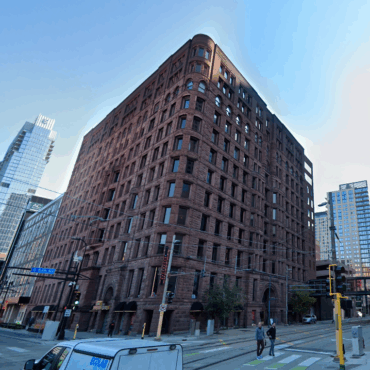
“Drawing upon lessons from other cities in the U.S. and abroad, Saint Paul should create an incentives program that will encourage the conversion of surplus office space (especially in pre-war Class B and C buildings with relatively small floorplates) into much needed residential housing,” the alliance’s report read.
The investment strategy’s other goals are to create more pedestrian-friendly streets and advance redevelopment opportunities.
The overarching goal is to develop an area that appeals to more than just offices and improves the overall downtown experience, Spencer said. By design, the central business district is an area that’s historically been dedicated to office buildings only occupied during business hours.
“Instead, if we look to have a place where you have a diversity of users around visitors, workers, and residents, then we know we get the kind of traffic we want for a more vibrant downtown,” Spencer said.
Across the river in downtown Minneapolis, a similar dynamic is playing out. Cellphone data analyzed by the University of Toronto School of Cities showed that night life and entertainment options are fueling a recovery in downtown Minneapolis, not nine-to-five office shifts.
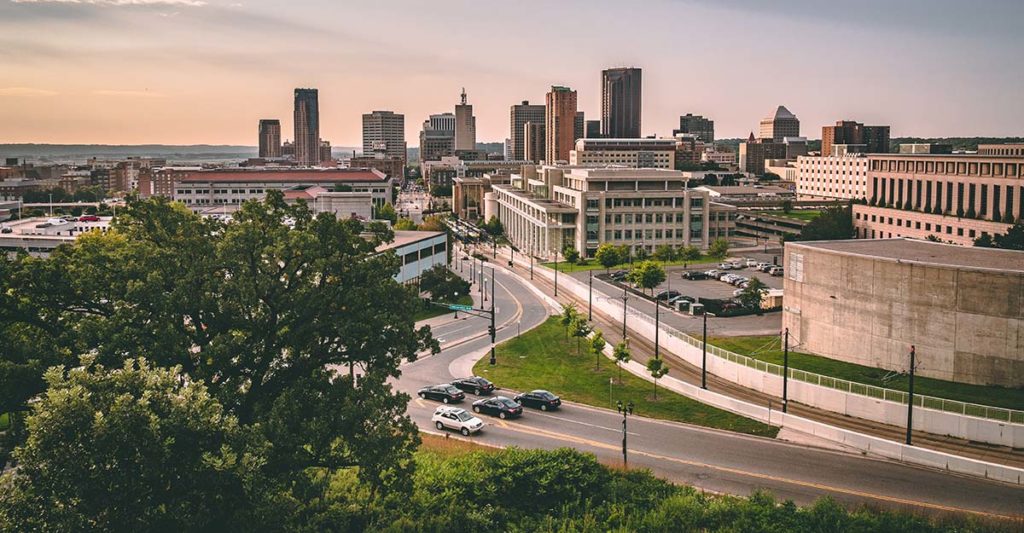
Photo courtesy of Visit Saint Paul
Meanwhile, in the first quarter of 2024, St. Paul’s central business district had an overall vacancy rate of 12.3%, according to the latest data by commercial real estate firm Colliers. That is notably lower than it is in downtown Minneapolis, which had a vacancy rate of 21% over the same time period. But Rob Davis, VP of Colliers International, said this vacancy rate is not “particularly out of order” for St. Paul. He described the area as a “stasis” that is prone to occasional “big swings and big moves.”
Spencer said the Downtown Alliance is looking to convert about 1.5 million square feet from commercial to residential to balance out downtown St. Paul. He said this is doable and already ongoing.
“We are calling on the public sector to step up with some subsidies and some programs to help accelerate that conversion,” Spencer said.
For the last 10 to 15 years, Davis said historic buildings in St. Paul have been turned into or are in the process of becoming housing and hotels.
“I see that trend continuing, although the inventory of buildings that are available to be converted to housing has dwindled because a lot of that has already occurred,” Davis said. “But there’s probably still room for more of that.”
TKDA’s plans are, of course, still a loss for St. Paul. Since its founding in the city in 1910, TKDA has maintained a considerable and noticeable presence in downtown.
“The folks over there have been great for downtown St. Paul, and they’ve been involved,” Spencer said. “It’s a little bit heartbreaking to lose a long-time presence downtown.”
Colliers’ Davis noted that the company has “been looking for something a bit more efficient with their programming and looking for maybe some greater variety of amenities nearby.” The move is in line with dozens of other firms’ efforts to downsize their office presence in the hybrid era.
Though TKDA leaving is a loss for St. Paul, Spencer thinks it can be viewed as a step towards a more vibrant area.
“We’re sad to see them go,” Spencer said. “But, at the same time, this disruption and the changes that are coming to downtown St. Paul, are also something I think if we manage this moment, the right way, the future is very exciting for downtown.”