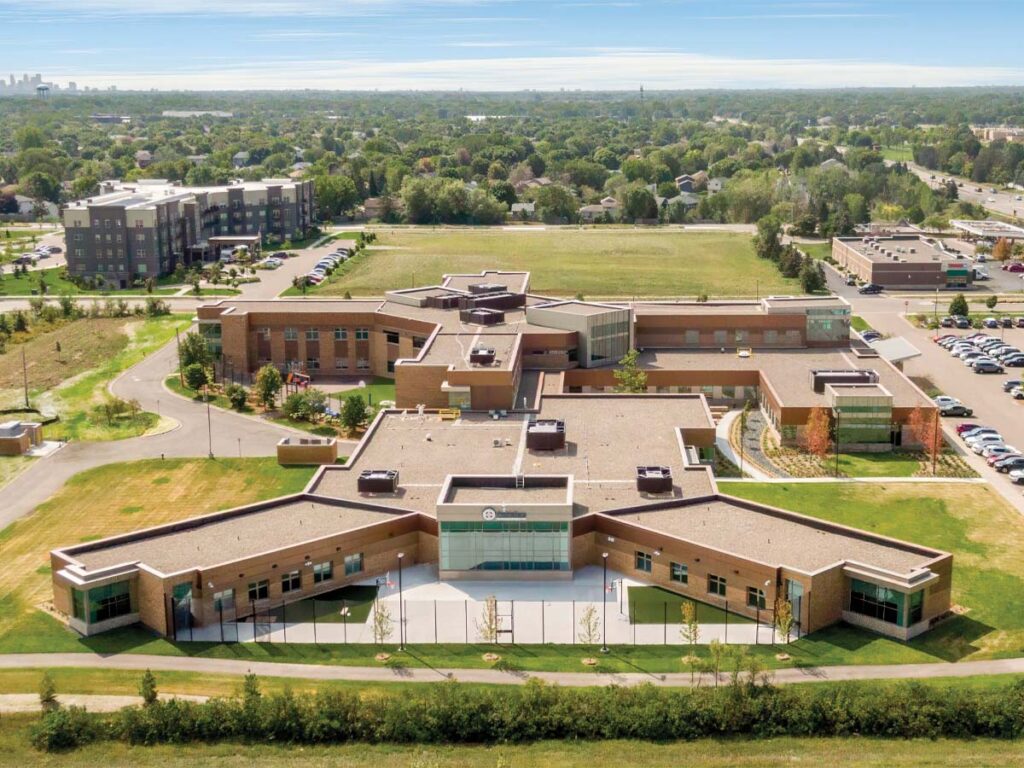
Mental Health Initiative: PrairieCare
Psychiatric health system PrairieCare got its start in Minnesota almost two decades ago when a Fargo psychiatrist noticed an influx of Twin Cities families driving their children all the way out to North Dakota for treatment. These days, the Brooklyn Park-based organization is still working hard to address unmet mental health needs for children across Minnesota, but it’s turning to an innovative technology platform developed largely in-house to tackle the most acute cases.
Known as the Mental Health Collaboration Hub, the web-based platform is designed to find stable placements for children experiencing behavioral health crises who’ve gotten stuck in emergency rooms. It’s a joint effort between PrairieCare and the Minnesota Department of Health, with support from the Metro Health and Medical Preparedness Coalition and youth well-being association AspireMN. Todd Archbold, PrairieCare’s CEO, says they’d long been thinking about ways to address the unfortunate trend, known in the industry as “boarding situations.”
“This has reached a crisis point,” he says.
The collaboration hub is designed to help connect children in need with providers who have space for them. It shares de-identified patient data and available beds and services among local providers. Today, more than 175 organizations are using the hub, including the state’s biggest health care systems. The hub formally launched in February 2023, and last year it helped find placements for over 200 youth.

Those who’ve used the collaboration hub say it’s been a game-changer. Kirsten Anderson, AspireMN’s executive director, says there’s still a “heartbreaking” lack of services for kids and families in the state, but the hub is a notable “point of light.”
“It’s created an opportunity for our provider experts … to expedite care for children in many circumstances,” she says. The platform also provides hard data to give health systems—and legislators—a better understanding of the biggest needs.
The idea for the Mental Health Collaboration Hub emerged out of weekly phone calls among providers that began in summer 2022. Archbold describes these as “getting to yes” calls—attempts to find stable placements for children stuck in emergency rooms. These could be kids with autism spectrum disorder, or kids who have exhibited aggressive behaviors. Many of them have been exploited or abused, says Christine Chell, lead regional health care preparedness coordinator with the metro health coalition.

Over time, Chell and other call participants started creating spreadsheets and a SharePoint site to exchange data about boarding situations in the metro. They had adopted a similar strategy for patients in dire need during the height of Covid-19.
Archbold had the idea to begin automating their work and make it easier to find available spaces for children in boarding situations. Under his direction, PrairieCare applied for and received a $300,000 grant from the Minnesota Department of Health to build out the Mental Health Collaboration Hub.
Boarding situations, unfortunately, happen across the nation. But the collaboration hub has attracted interest from providers in many other states and could be a model for addressing the issue. Says Chell, “Anybody that sees this marvels at it.”