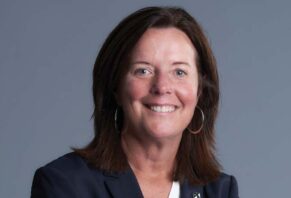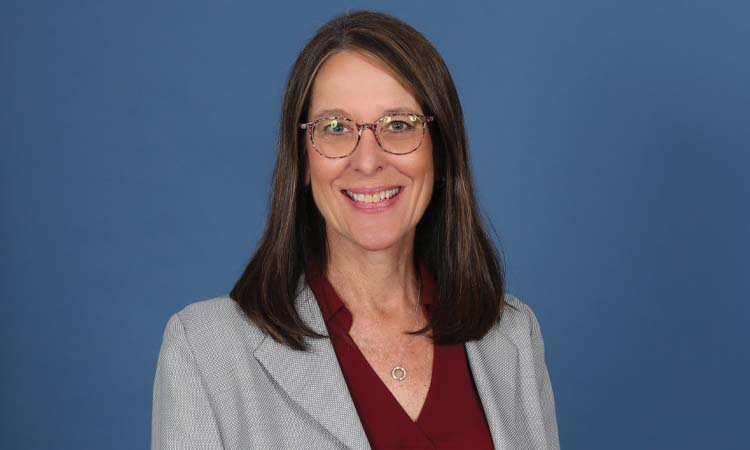
2025 Outstanding Directors: Paula Phillippe
Paula Phillippe describes the role of a strong board of directors as “a combination of being challenging and being supportive.”
“Boards provide outside perspective, different points of view, and expertise in different backgrounds,” Phillippe says. “And they have a strategic outlook. As they bring all of that to the table, that really helps the CEO and the other executive leaders look at their organization in different ways.” These are ways that company managers might not see on their own, but which can help them sustain their organization’s success.
It was her “outsider” status, along with her professional experience and her passion for good governance, that led Phillippe to join the board of St. Paul-based Highland Bank, a community financial institution that works with both individuals and businesses, in January 2021.
After a career that included executive positions in financial services (Piper Jaffray, RBC Dain Rauscher, Marquette Financial) and health care (Fairview Health Services, Blue Cross Blue Shield of Minnesota), Phillippe launched a consulting practice in 2019. Her work includes advising smaller-company boards and their top executives on board effectiveness, CEO succession, and organizational design and strategy. She is also on the executive committee of the Private Directors Association’s Minnesota chapter, which keeps her abreast of governance trends and education.
At Highland Bank, Phillippe serves on the audit and CEO compensation committees. Her governance experience has allowed her board colleagues to see “how a good board can function,” Highland CEO Rick Wall says. “She has helped us evolve from a small private-company board to a board that consists mostly of non-managers and non-owners. We now have more outsiders than insiders on our board.”
Highland Bank’s board composition changes have largely taken place over the past five years, a period that overlaps almost completely with Phillippe’s directorship. Over time, the bank’s ownership has changed from one shareholder to three. “It seemed like the right time to have more outsiders on the board to provide good governance for our organization—much like you’d have in any larger company,” Wall says. He notes that Phillippe has helped establish practices that make board meetings run more smoothly and productively, initiating conflict-of-interest disclosures and improving some executive compensation processes.
In all of her board service, Phillippe has been particularly interested in ways that companies can grow. And maintaining growth, she says, has been the Highland board’s chief area of focus. The bank’s directors discuss and critique management’s strategic aims and help it explore growth opportunities in the Twin Cities, Highland Bank’s primary market. According to Phillippe, board members ask questions such as: What additional expertise might the bank want to develop? What new specialized services might be profitable to add?
As a student and a practitioner of strong governance, Phillippe is also concerned with how a board can help companies recognize and mitigate risk. At Highland, one of those risk areas is compliance with federal capital requirements. The 2008-09 financial crisis resulted in (among other things) government regulators requiring financial institutions to increase their capital ratios. Highland Bank’s board has maintained oversight of the new and proposed regulations that have arisen since then.
Phillippe and her board colleagues also keep tabs on technology risks. Highland’s IT subcommittee, which includes a director with tech expertise, scrutinizes the bank’s systems, their risk profile, and its cybersecurity strategies. And since Highland Bank contracts with third parties for a variety of digital processing and operational activities, the board seeks to ensure that outside vendors are conducting regular security audits of their own systems.
Highland’s board also provided guidance on integrating Ely-based Boundary Waters Bank, which Highland acquired in December 2022.
“Boards also provide accountability,” she adds. Regular board meetings require executives to provide detailed reports so that members can analyze key metrics and assess organizational performance. All told, “boards bring strategic perspective, insight, accountability, and also the risk mitigation that helps avoid problems,” Phillippe says. “I just love those things. They help organizations be successful in ways that really matter.”
Other board service
VAA Engineering (2021-present)
Private Directors Association Minnesota (2021-present)
Thrivent Financial Member Network Region Board (2016-22)
Klein Bank (2011-18)
Red Wing Medical Center (2008-12)