



The White House has decided to fast-track the federal permitting and environmental review process for the Southwest Corridor light-rail line.
Politics + Public Policy
The project received the largest portion of $47.5 million in capital grants just awarded by the state; among other high-profile projects, the Metropolitan Council received just $2 million of the $14 million it requested for the proposed Southwest Corridor light-rail line.
The state assigned scores to 37 projects vying for a portion of the funds, and Governor Mark Dayton is expected to make a final determination about the winners later this week.

The mayor also called for a 1.7 percent hike in the city’s property tax levy, although he said that most Minneapolis homeowners are not expected to experience an increase in their city property taxes.
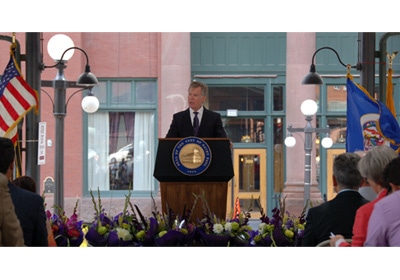
Chris Coleman’s proposed 2013 budget would reduce spending by $1 million, increase the property-tax levy by 1.9 percent, and restore $1 million in funding to the police department.
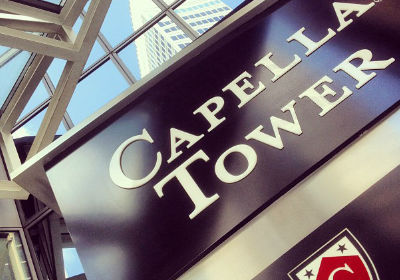
Capella University said that the proposed marriage amendment will negatively impact local companies’ ability to attract and retain employees; Mayo Clinic, meanwhile, will reportedly not take a position on the proposed amendment.
The annual Midwest U.S.-Japan Association Conference will bring together business representatives from the Midwest and Japan, as well as government officials, to explore strategies for enhancing business relationships.
Thomson Reuters, which employs roughly 7,000 people in Minnesota, said that the proposed amendment would limit its ability to attract top talent; separately, a group of local law firm leaders said that the marriage amendment “endangers our business climate.”
Roughly 65 percent of respondents to a recent Twin Cities Business poll said they believe the marriage amendment would have an impact on Minnesota businesses, and 50 percent said it is appropriate for companies to take a public stance on such issues.
The City of Minneapolis spent $467,139 on staff and contract lobbyists last year, the most of any local government in the state.
The city predicts that the switch from seven-sort recycling will increase materials recovered by 60 percent and boost the Minneapolis recycling rate from 18.1 percent to 32 percent.
Bill George argues that passage of the amendment would make it difficult for Minnesota companies to recruit and retain the talented people required to build global companies.
The governor said that the tax bill-which included property tax breaks and other benefits for the state's businesses-ignored his requirement that "any new spending increases or tax reductions had to maintain the current budget reserve and avoid increasing future deficits."
St. Paul could compete with other cities for a portion of a $50 million pot to pay for a regional ballpark in Lowertown; meanwhile, supporters of the Southwest Corridor Light Rail Line say the project risks losing federal support without a state contribution.
The Minnesota House passed the Vikings stadium bill in a 73-58 vote on Monday but included a series of amendments-including one that a Vikings spokesman called "not workable." The Senate began debating the stadium bill early Tuesday afternoon.
After the NFL cautioned that the time to sell the Vikings might be nearing, Governor Dayton and a bipartisan group of legislators plan meet with NFL leaders on Friday; Dayton also recently said that he wouldn't rule out a special legislative session to address the stadium issue.
The bill, which was unanimously approved by both the House and the Senate, would allow employers in the private sector to express a hiring preference for all veterans and for the spouses of veterans who have died or who have a service-related disability.
Representative Morrie Lanning, the sponsor of the House stadium bill that would use public money to fund a new $975 million Vikings stadium, said after the vote that "somebody will have to pull a rabbit out of a hat for this thing to stay alive."