An Iceland-born Quilter’s Rise to Fame in Minnesota
Longtime quilter Gudrun Erla’s entrepreneurial tale is a long one, stretching from Iceland to Minnesota. These days, her name is well known among aspiring quilters. Over the last more than two decades, her business, GE Designs, has grown from a largely one-woman operation out of her home to a Chaska warehouse with a 20-person staff and worldwide appeal.
She could chalk up her success to a Covid-driven boom in crafting, but ultimately, her entrepreneurial grit and instinct helped her business thrive long after pandemic lockdowns ended.
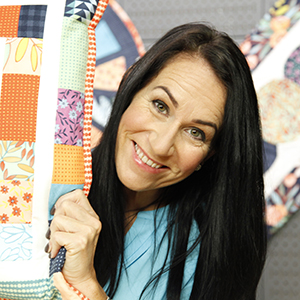
Decades of work toward broader accessibility helped shape the evolution of GE Designs. For example, the business sells a variety of fabrics and tools Erla created, including her trademarked Stripology ruler. Manufactured through partner Creative Grids, the ruler allows users to cut fabric easily without risking an uneven cut. Since the technology launched in November of 2014, it has been adopted by many across the industry to make quilting easier.
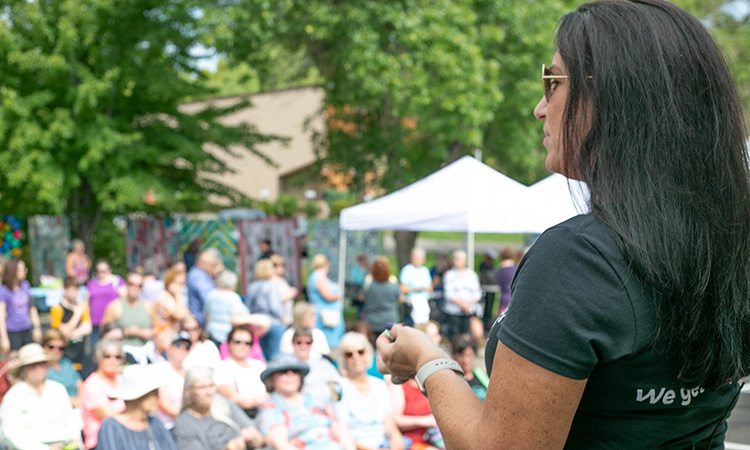
As the ruler’s popularity grew over the years, Erla wrote several books, attended trade shows, and held workshops to promote the product. She also expanded her website and held webinars through YouTube and Facebook Live. By 2020, Erla was traveling to teach and lecture all over the world.
“Wherever I went to teach, I created these pockets of real followers and superfans and then, of course, 2020 hit,” she said. “At that point, I was traveling about 175 days out of the year.”
Erla’s whole year was canceled in March of 2020, a month she’d been scheduled to teach a class in South Carolina followed by another teaching stint on a cruise ship. Everything stopped and the first thing Erla thought about was all of her students who had bought all their supplies and were ready to quilt. So, working with her husband, Erla designed a special pattern and made it available for free online. She taught the pattern live on YouTube and Facebook that month. The class “exploded,” she said. Close to 20,000 people from 37 countries downloaded the pattern.
“We were all sewing, making the same quilt, taking the same instruction from me, using whatever fabric people had. We were sewing together without being together and it just kind of transformed the business,” Erla said. “I had to start selling more fabric because people were wanting to just stay home and sew.”
While demand for fabric rose, many brick-and-mortar shops had to close their storefronts due to Covid, and many didn’t have a robust online operation. Some people were still nervous about going to the fabric shops that remained open, she noted. As fabric companies started receiving cancellations of store orders, Erla said she was able to pick up those orders. Her mantra was: “Send me any fabric you’ve got,” she chuckled.
As her customer base continued to order more and more fabric online, Erla hired her kids and friends to try to keep up with demand. Her house quickly filled with fabric, so by October, she moved her supply out of her Minneapolis house and into a warehouse in Chaska. From there, she continued to build her team. “I like to say I hired people for one thing but they ended up being something else.”
GE Designs operates under a very specific business model that’s different from many models in the industry, Erla said. All fabric is pre-cut so orders can be shipped the same day or the next day, which is rare in the quilting industry because most shops selling any kind of custom goods need extra time to fill out a specialized order.
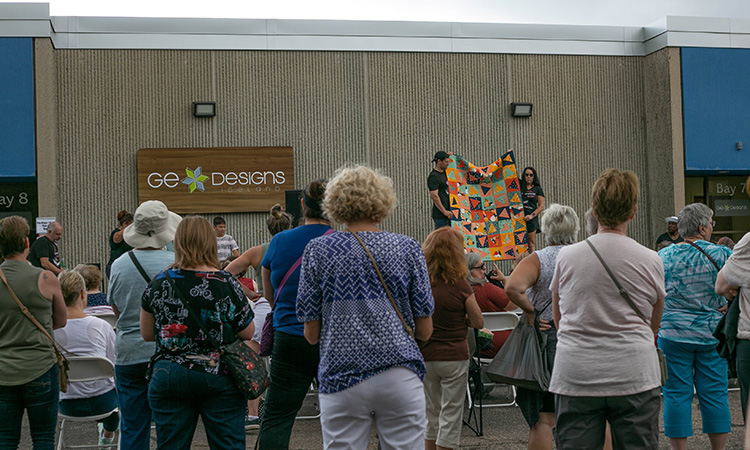
The company doesn’t let a single piece of fabric go to waste. Scraps are sold at a steep discount. Shipments might also “come in a really weird box,” she adds, as the company’s reuse and recycling model extends to its cardboard use. But no matter what box her products come in, Erla said customers will know what’s inside has her stamp of approval. “What we sell is stuff that I use and I recommend,” she said.
In the industry, Erla has made her mark by taking traditional patterns and methods and adding her own unique twist, whether it be through a new design or by finding ways to make a traditional design more accessible to all. “If you get started on the right foot, you’re going to do something that gives you real joy instead of starting somewhere and being frustrated, which is when people give up,” Erla said.
Erla is hopeful looking to the future. She said demand for online resources and virtual classes remains strong, and and she believes this could be partly due to the accessibility needs of her customer base. “We realized shortly after we opened the first retreat, that virtual retreats were something that was not a Covid thing. It was a very much-needed thing because it connected people from all over the world,” she said, adding that it made this community accessible to people who might not have the means to travel, had disabilities, or were caretakers.
Erla reflected on what drove her passion for quilting. Born and raised in Iceland, she started quilting at age 23. She moved to the United States in 2003 after her patterns started to take off here. She reflected on what inspired her to share her passion for quilting and making it more accessible to a range of people and ability levels. The reason quilting becomes a passion is simple, she said: “You have that space to yourself and you’re creating something with your hands, and what you make is beautiful.”