

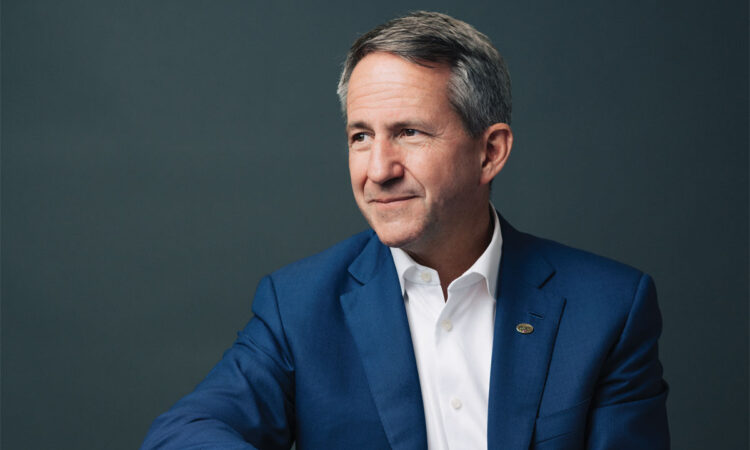
Christophe Beck’s Call to Kickstart Minnesota’s Economy
When it comes to Minnesota’s economy, one of its biggest champions contends that the state has become complacent and isn’t doing enough to jump-start growth.
“Sometimes in Minnesota, we have this tendency of playing not to lose,” says Ecolab CEO Christophe Beck, who chairs Greater MSP, a St. Paul-based economic development organization. Beck also serves as Ecolab’s president and chairman.
Beck, who grew up in Switzerland, has lived in Minnesota since 2007, and is focused on expanding Ecolab and Minnesota’s economy. He’s concerned about Minnesota’s slow growth rate and offers some prescriptions for developing new businesses and capitalizing on existing strengths.
Beck described frustration with a “Let’s try to keep what we have, and let’s make sure that progress doesn’t overwhelm us” mindset. He argues that the state cannot continue to limp along with anemic growth.
Minnesota’s real GDP per capita annual growth rate was 1% from 2019 to 2024, according to “2026 Business Benchmarks Report: An Economic Imperative for Growth” published by the Minnesota Chamber Foundation. That rate earned Minnesota a ranking of 38th among the 50 states. Over the five-year period, Minnesota ranked 33rd in GDP growth, 39th in job growth, 40th in labor force growth, and 46th in growth of real median household income, the chamber reported.
“We want to play to win,” Beck says. “At the end of the day, when we win, we create more job growth. That’s more tax revenues. We create jobs, and that’s more of a future for our kids. We create new companies. That’s a place where people want to come.”
Beck, who has a reputation for bluntness, says: “One thing I’ve learned in life is nobody follows losers.” He doesn’t want Minnesota to be an economic loser.
“We need to change our mindset and to say, ‘Let’s get into the top quartile’ ” for state GDP growth, he says. “We’ve lost our mojo the last 20 to 30 years. We have everything to get it back, but we need to change our mindset.”
In the political arena, he says, there isn’t a need to pit businesses against the general population or specific stakeholders. He’d like elected officials to bring people together, look for solutions that support the common good, and recognize that a growing and healthy business sector is imperative for supporting government services.
“We think way too much about what’s right for the people versus what’s right for growth, for the businesses,” Beck says. “We’re able to do both.”
At Ecolab, he says, the company focuses on services such as preventing infections and ensuring enough water is available for future generations. It’s an example of a growing business “doing well by doing good,” he says. “We call it winning the right way.”
“Instead of looking at issues in a divided way—left, right, Republicans, Democrats, women, men, Black, white, old, young, rich, poor—let’s get together for the better of Minnesota,” Beck says.
A High-Tech Powerhouse
The predecessors of today’s Silicon Valley companies started in Minnesota, Beck notes. “The supercomputers were invented in this state—Honeywell, Control Data, and Cray Research all were here,” he says. But the next generation of computer technology was developed in California’s Silicon Valley.
The state is still home to Medtronic, where the implanted pacemaker was developed decades ago, plus numerous other medical technology companies are based in Minnesota. Keeping in mind how cutting-edge computer tech migrated to Silicon Valley, “we’d better protect and develop what we’ve built over the years,” Beck says. To preserve and expand the medtech industry, he stresses that Minnesota must support the sector, including existing companies, universities, scientists, employees, and startups.
He also wants to establish Minnesota as a global center of expertise for the technology that powers and supports data centers. “We could be the place where we master technologies to power high technology,” Beck says. That includes developing and refining technology to reduce the amounts of electricity and water used by data centers.
“If we can create the hotbed of technology to help cool data centers, to produce chips, to produce clean energy to power AI as well, we should welcome that in Minnesota,” Beck says.
“We should support all those larger companies, like Ecolab, like nVent, and most importantly, research startups, people who want to try new things in universities,” he says.
Because of the digitalization trend and the expanded use of AI, building and managing many more data centers is virtually guaranteed. “Do we want to be at the forefront of it,” Beck asks, “or do we want to be the victims of what’s happening in the world? I think Minnesota should be in the driver’s seat.”
“The decision to invest in Minnesota is a “leap of faith. I want to say that very honestly. Minnesota is not known anymore as a business-friendly state, which we used to be.”
—Christophe Beck, CEO, Ecolab
Investing in Minnesota
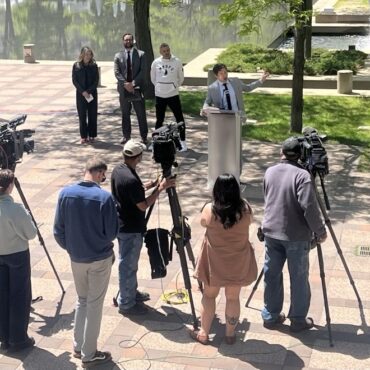
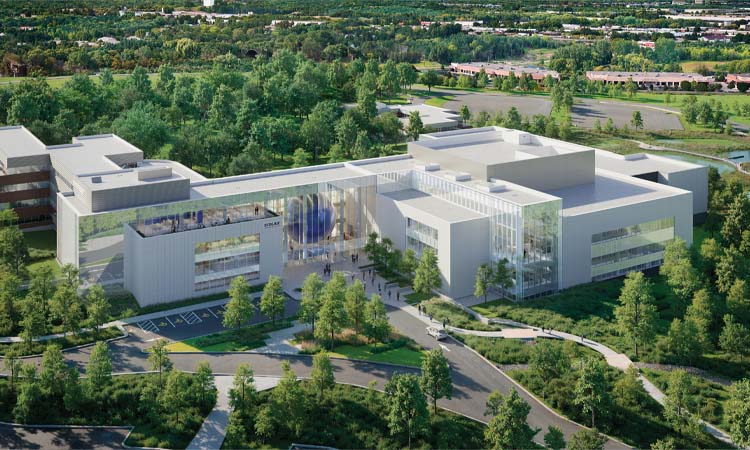
In March, Beck announced at a Greater MSP event that Ecolab would spend $500 million to upgrade and expand its Eagan facilities, where its research and development and training centers are located.
The decision to invest in Minnesota is a “leap of faith,” Beck says. “I want to say that very honestly. Minnesota is not known anymore as a business-friendly state, which we used to be.”
In the late 20th century, he says, Minnesotans made major strides in building health care organizations, as well as medtech, agriculture, food, insurance, and retail businesses. “That was when Minnesota was very business-friendly, very innovative, driven, and very entrepreneurial,” he says.
“The last 30 years, we’ve started to become complacent,” he says, as state and local government policies became less supportive of business and many Minnesotans took the private sector for granted.
What’s Beck’s advice for government and private sector leaders? “Concentrate on what’s right for Minnesota. How do we bring companies here? How do we bring innovation? How do we support new companies? How do we help existing companies invest more in Minnesota?”
Beck acknowledges the drain of capital from the state. He notes that many large Minnesota companies are choosing to expand outside the state for business reasons. Beck wants the business climate to become more hospitable to reverse that trend. “Having those companies invest in Minnesota instead of outside Minnesota—well, it’s the easiest thing on Earth to do because we invest no matter what,” Beck says.
Every company wants to grow, so he wants to channel that growth in Minnesota. Because Minnesota still has a diversified economy and doesn’t rely on a couple of major industries as some states do, he maintains that Minnesota could experience substantial growth if it has effective government leaders who want to work with companies and approve business-friendly laws.
Beck thinks he’s seen positive change in St. Paul’s attitude toward business since Mayor Kaohly Her took office this year. She is welcoming established businesses, startups, innovators, and anyone who wants to create value, he says.
In addition, Beck says the new mayor is making it easier to deal with city government. “We get together every month,” Beck says. “We talk about the barriers we can remove to grow even faster, to create more jobs, to create more revenues to finance and to fund everything we love.”